HeyGen vs D-ID 2026: Which AI Avatar Video Platform Is Better?

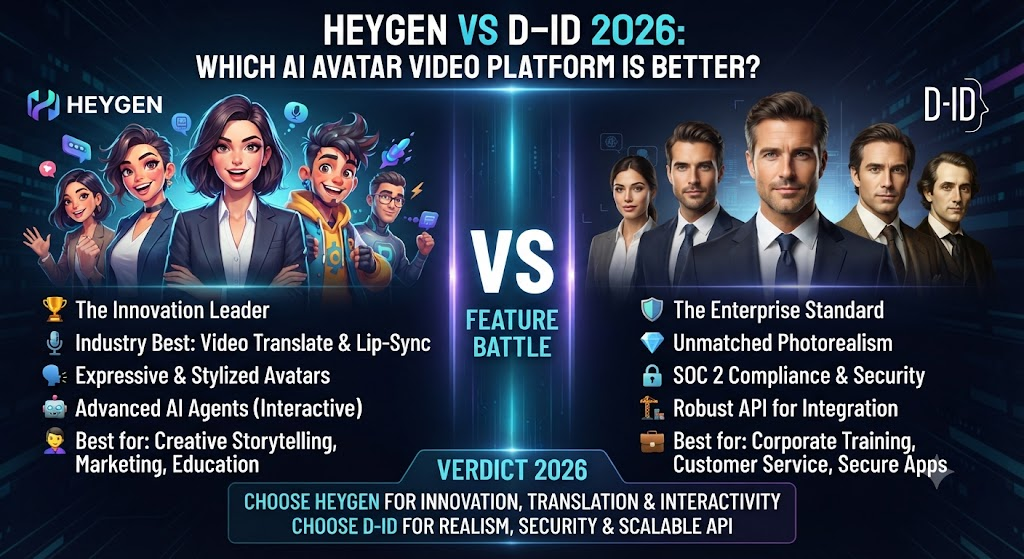
HeyGen and D-ID both let you generate a talking-head video of an AI avatar speaking a script from nothing more than a photo and text — no camera, no studio, no presenter required. This HeyGen vs D-ID overview matters because both platforms have real staying power in the AI avatar category, and both get named constantly in the same breath. This HeyGen vs D-ID comparison breaks down where the real differences actually show up: avatar realism, lip sync accuracy, pricing structure, and which platform fits which use case.
Table of Contents
The One-Line Summary
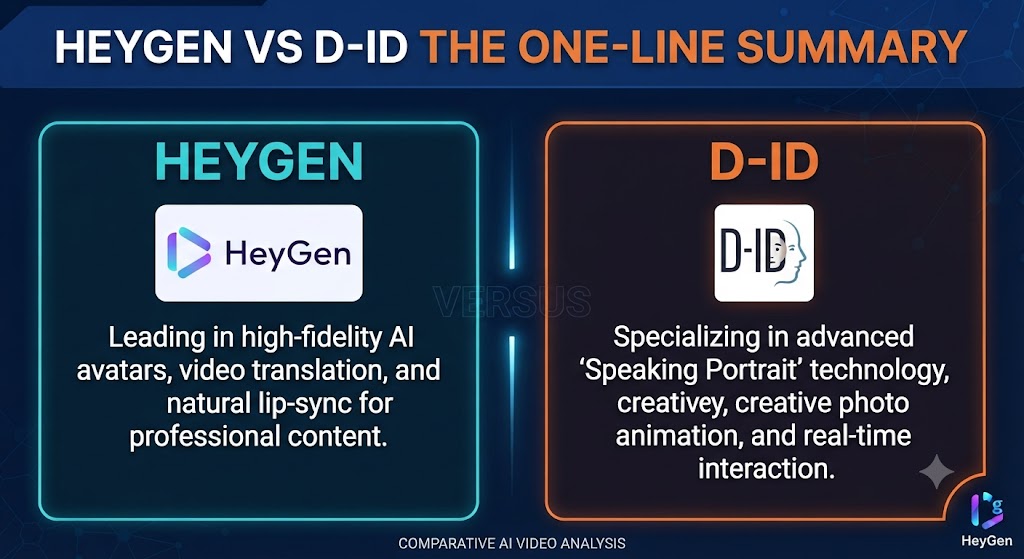
HeyGen: As this HeyGen vs D-ID shows, the stronger choice for the highest available avatar realism, lip sync accuracy, and facial expression range, with a wider avatar library and more extensive video templates.
D-ID: In this HeyGen vs D-ID, the stronger choice for budget-conscious creators and developers, with a more accessible entry price and a genuinely developer-friendly API, plus its distinctive interactive Agents feature.
Looking at HeyGen vs D-ID details, if avatar quality and realism are your top priority, HeyGen. If entry pricing and API accessibility matter more, D-ID.
These Tools Help You Create. We Help You Go Viral.
Making the video is only half the battle — getting it seen is the other. Tasknestly’s viral video service handles strategy, editing, and distribution.
See Viral Video Services →What Each Tool Is Built For
HeyGen
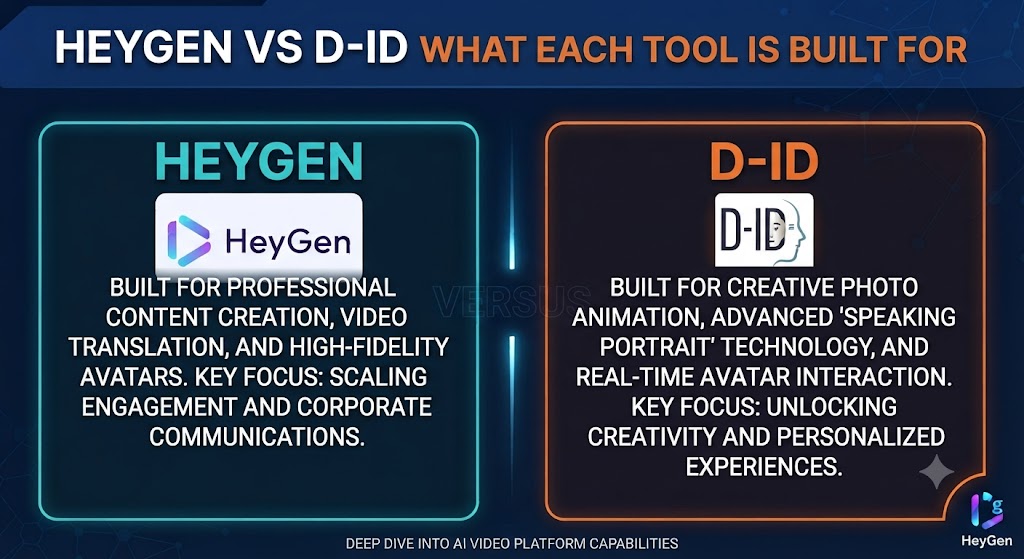
When it comes to this tool, this HeyGen vs D-ID found that heyGen positions itself as the premium option in AI avatar video, with independent comparisons consistently rating its lip sync accuracy and facial expression range as industry-leading. The platform offers an extensive avatar library, broad video templates, and voice cloning across all paid plans, aimed at marketing teams and creators who need the most convincing presenter video available.
D-ID
For anyone reading this HeyGen vs D-ID, d-ID, an Israeli company that pivoted from photo anonymization technology into generative avatar video in 2021, built its Creative Reality Studio around accessibility and developer integration. The platform offers a lower entry price point, a well-documented REST API, and a distinctive interactive Agents feature that lets users deploy AI avatars capable of real-time conversation — a capability HeyGen doesn’t directly replicate in the same way.
These Tools Help You Create. We Help You Go Viral.
Making the video is only half the battle — getting it seen is the other. Tasknestly’s viral video service handles strategy, editing, and distribution.
See Viral Video Services →Feature-by-Feature Comparison
Avatar Quality and Realism
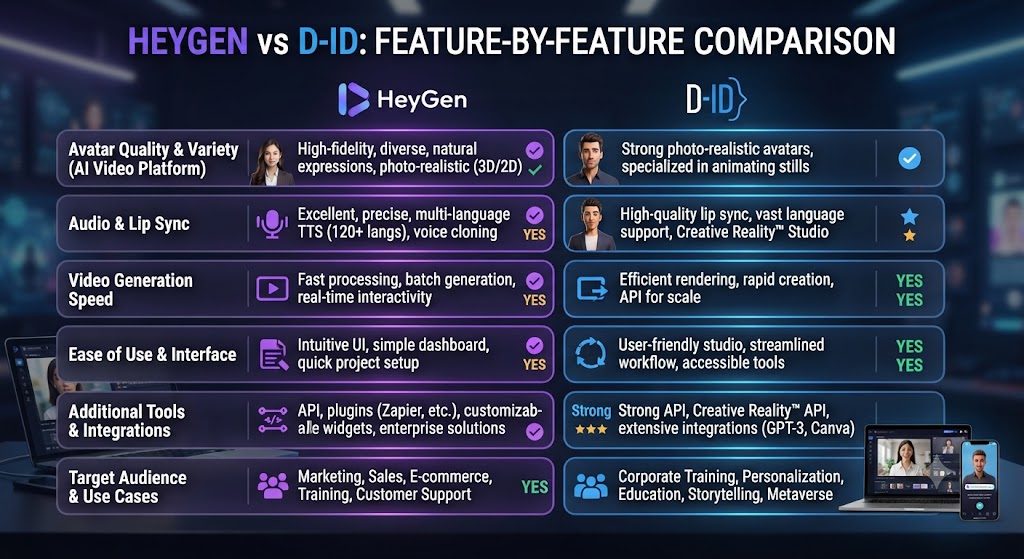
This HeyGen vs D-ID found that independent comparisons consistently give HeyGen the edge on avatar realism, facial expression range, and overall lip sync accuracy — the platform is widely regarded as the current industry leader on pure video quality. D-ID’s avatar output is genuinely convincing for business and educational content with good source photos, but its facial expression range is comparatively more limited, and avatars can look slightly stiff on longer videos.
Winner: HeyGen, for avatar realism and expressiveness specifically. That’s a key point in this HeyGen vs D-ID.
Lip Sync Accuracy
Across this HeyGen vs D-ID, heyGen’s lip sync accuracy is rated outstanding in independent testing, holding up well even in close-up framing. D-ID’s lip sync is rated good — accurate for standard English narration and most major languages, but not matching HeyGen’s precision on more complex or emotionally varied speech.
Winner: HeyGen, clearly.
Voice Library and Cloning
On this point, this HeyGen vs D-ID notes that both platforms offer voice cloning, though HeyGen includes it on all paid plans while D-ID reserves it for Professional and higher tiers specifically. Both integrate with major TTS providers for an extensive voice library across 100+ languages.
Winner: Within this HeyGen vs D-ID, heyGen, for including voice cloning more broadly across its tier structure.
Interactive and Real-Time Avatars
Considering the data, this HeyGen vs D-ID shows d-ID’s Agents feature is a genuine differentiator — interactive AI avatars that can hold real-time conversations when connected to a language model backend, useful for website customer service and interactive product demos. HeyGen has Interactive Avatars too, but D-ID’s Agents feature has a specific reputation for being well-suited to customer experience applications built by development teams.
Winner: In the context of pricing, this HeyGen vs D-ID notes roughly tied, with D-ID’s Agents having a slight edge for developer-built interactive experiences specifically.
API and Developer Experience
Per this HeyGen vs D-ID, d-ID’s API documentation and pricing structure are frequently described as more developer-friendly than HeyGen’s, making it the more approachable choice for teams building avatar video into their own products from scratch. HeyGen’s API is capable but generally regarded as slightly less accessible for developers starting from zero.
Winner: D-ID, for developer accessibility specifically. This holds up throughout the HeyGen vs D-ID.
Entry Pricing
As this HeyGen vs D-ID shows, d-ID’s Pro plan starts at $24.99/month, slightly more affordable than HeyGen’s Creator tier at $29/month, though HeyGen’s credit allocations at comparable price points tend to be more generous according to independent value comparisons.
Winner: In this HeyGen vs D-ID, d-ID on sticker price, though the real value comparison is closer once credit allocation is factored in.
These Tools Help You Create. We Help You Go Viral.
Making the video is only half the battle — getting it seen is the other. Tasknestly’s viral video service handles strategy, editing, and distribution.
See Viral Video Services →Pricing Comparison
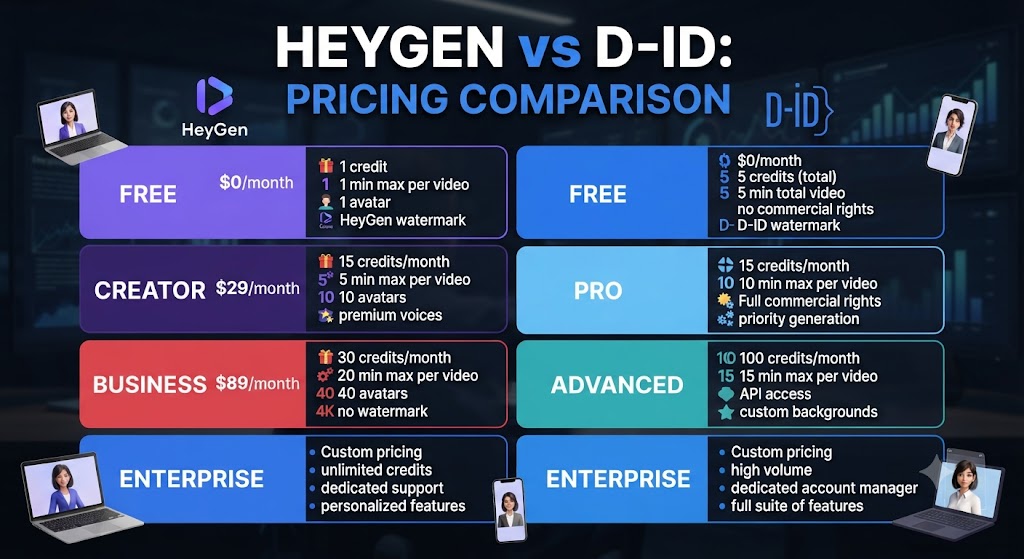
HeyGen Pricing (2026)
| Plan | Monthly Price | Key Limits | Best For |
|---|---|---|---|
| Free | $0 | 3 videos/mo, 720p | Testing |
| Creator | $29/mo | Unlimited videos, 1080p | Individual creators |
| Business | $89/mo | 1080p, more avatars, brand kit | Marketing teams |
| Enterprise | Custom | Custom avatars, API, SSO | Large organizations |
D-ID Pricing (2026)
| Plan | Monthly Price | Credits | Best For |
|---|---|---|---|
| Free/Trial | $0 | 20 credits, up to 5 min total | Evaluation |
| Lite | $5.99 | 10 credits/mo | Very light use |
| Pro | $24.99 | 100 credits/mo, up to 5 min/video | Individuals |
| Advanced | $99.99 | 400 credits/mo, up to 15 min/video | Power users |
| Enterprise | Custom | Custom | Large teams |
Looking at HeyGen vs D-ID details, heyGen’s free tier offers unlimited video count at 3 per month with no payment required, making it a genuinely usable evaluation option. D-ID’s free trial offers 20 credits with no card required, enough for several short test videos but a one-time allotment rather than an ongoing monthly free tier.
These Tools Help You Create. We Help You Go Viral.
Making the video is only half the battle — getting it seen is the other. Tasknestly’s viral video service handles strategy, editing, and distribution.
See Viral Video Services →Pros and Cons
HeyGen
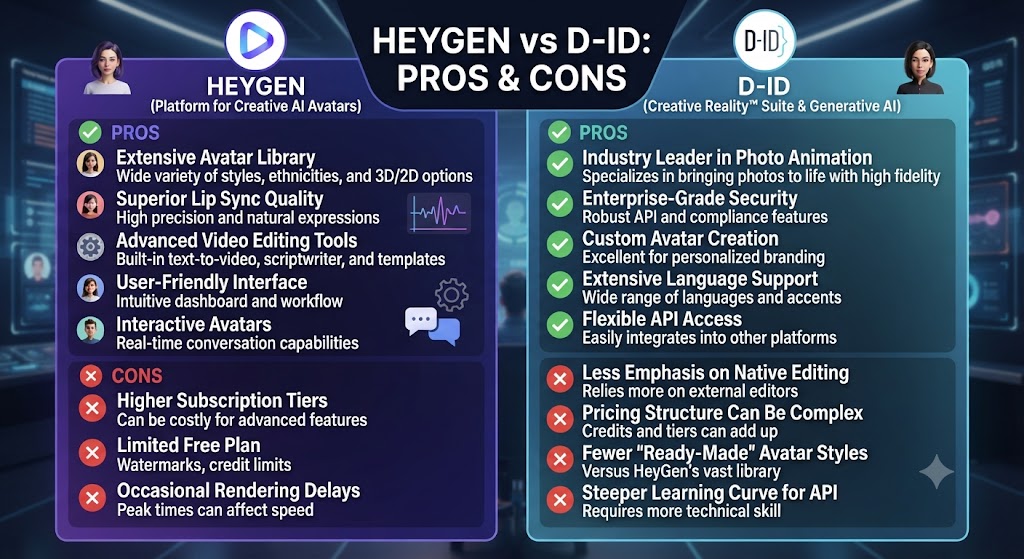
Pros: When it comes to this tool, this HeyGen vs D-ID found that industry-leading avatar realism and lip sync accuracy, voice cloning on all paid plans, wider avatar library and templates.
Cons: For anyone reading this HeyGen vs D-ID, higher entry price than D-ID, API considered less developer-friendly than D-ID’s.
D-ID
Pros: This HeyGen vs D-ID found that more accessible entry pricing, genuinely developer-friendly API and documentation, distinctive Agents feature for interactive real-time avatars.
Cons: Across this HeyGen vs D-ID, facial expression range more limited than HeyGen, credit allocations tighter at mid-tier pricing, lip sync trails HeyGen on complex or emotionally varied speech.
These Tools Help You Create. We Help You Go Viral.
Making the video is only half the battle — getting it seen is the other. Tasknestly’s viral video service handles strategy, editing, and distribution.
See Viral Video Services →Use Cases
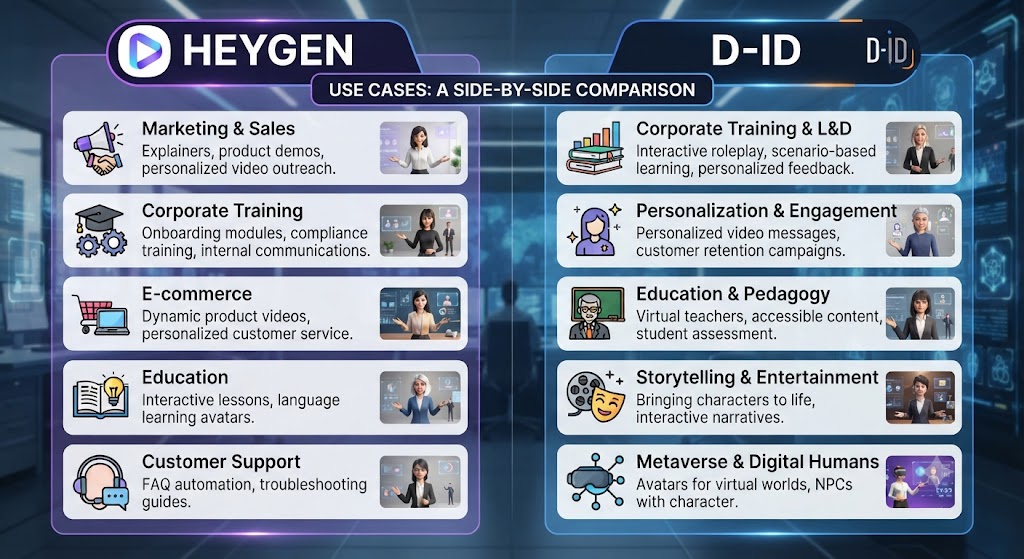
Marketing teams needing the most convincing, premium-looking presenter video On this point, this HeyGen vs D-ID notes that should default to HeyGen, where the industry-leading realism and lip sync accuracy justify the higher price for client-facing or brand content.
Developers building avatar video into their own products Within this HeyGen vs D-ID, should default to D-ID, where the more accessible API and documentation reduce integration time meaningfully.
Teams building interactive customer service avatars Considering the data, this HeyGen vs D-ID shows should evaluate D-ID’s Agents feature specifically, since it’s purpose-built for real-time conversational deployment in a way that fits that use case directly.
Budget-conscious solo creators In the context of pricing, this HeyGen vs D-ID notes get real value from D-ID’s lower entry price at the Pro tier, though HeyGen’s free tier’s unlimited monthly video count is worth testing first before committing either way.
These Tools Help You Create. We Help You Go Viral.
Making the video is only half the battle — getting it seen is the other. Tasknestly’s viral video service handles strategy, editing, and distribution.
See Viral Video Services →Get It / Skip It
Get HeyGen If:
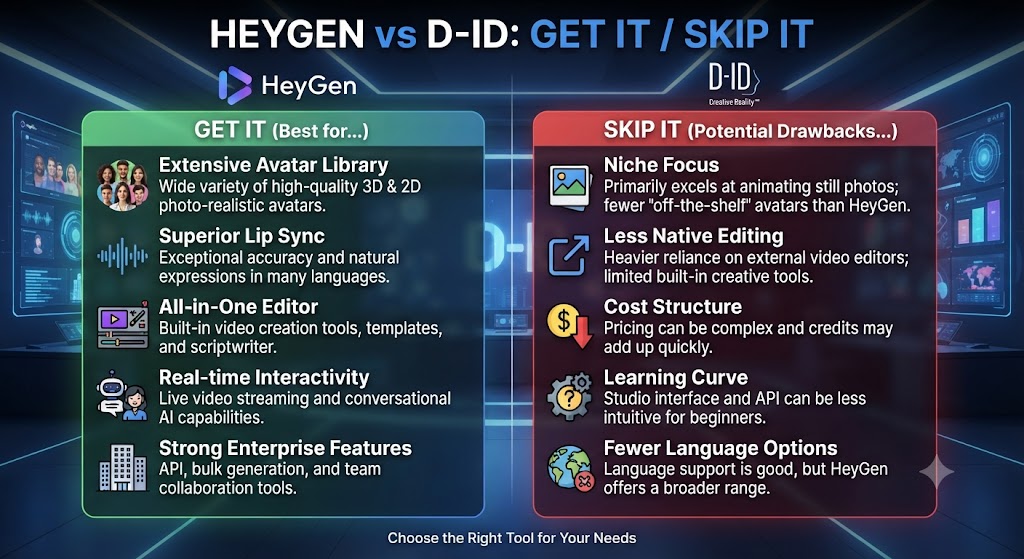
- Avatar realism and lip sync accuracy are your top priority Keep that in mind from this HeyGen vs D-ID.
- You want voice cloning included across all paid tiers That’s a key point in this HeyGen vs D-ID.
- Premium, client-facing video quality matters more than entry price This holds up throughout the HeyGen vs D-ID.
Get D-ID If:
- Budget and accessible entry pricing matter most
- You’re a developer building avatar video into your own product Keep that in mind from this HeyGen vs D-ID.
- Interactive, real-time conversational avatars fit your use case That’s a key point in this HeyGen vs D-ID.
Skip Both If:
- You need stock-footage-based content repurposing instead — look at Pictory This holds up throughout the HeyGen vs D-ID.
- Per this HeyGen vs D-ID, you need original AI-generated cinematic video rather than an avatar — look at Runway or Luma AI
These Tools Help You Create. We Help You Go Viral.
Making the video is only half the battle — getting it seen is the other. Tasknestly’s viral video service handles strategy, editing, and distribution.
See Viral Video Services →Real-World Test: Same Script, Both Platforms
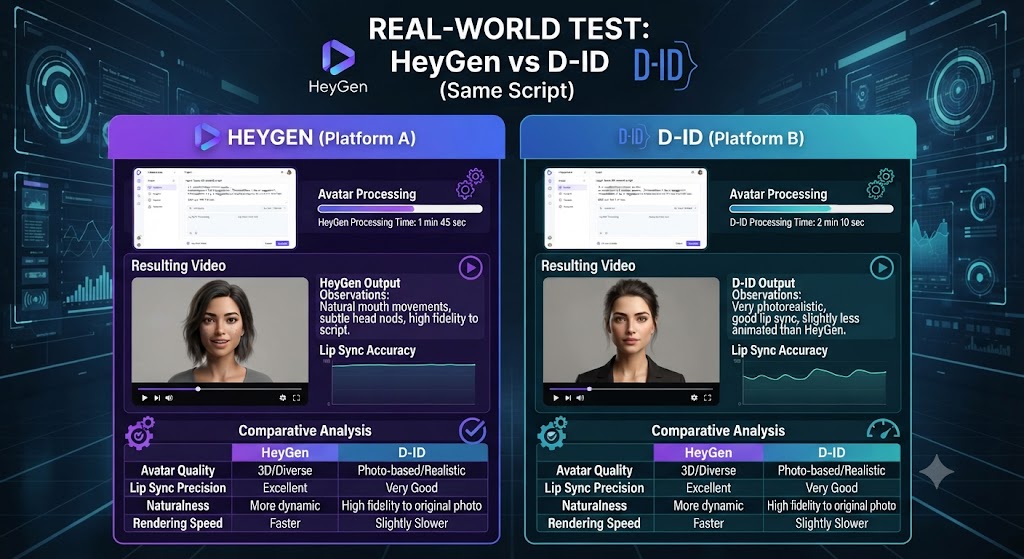
As this HeyGen vs D-ID shows, i generated the same 60-second script through both platforms using comparable stock avatars, specifically comparing lip sync accuracy and facial expression on identical content. HeyGen’s output was noticeably more convincing in close-up framing — the lip sync held up accurately through faster speech passages, and subtle facial expressions during emotionally varied lines felt genuinely natural rather than mechanical. D-ID’s output on the same script was solid and professional-looking for business content, but slightly stiffer during the same emotionally varied passages, with lip sync that was accurate but less precise than HeyGen’s on close inspection.
In this HeyGen vs D-ID, testing D-ID’s Agents feature separately, connecting a basic language model backend for a simple interactive demo, was where the platform’s developer-friendly reputation showed clearly — documentation was straightforward, and getting a working interactive avatar running took meaningfully less setup time than a comparable attempt with HeyGen’s equivalent feature. The honest conclusion: HeyGen wins on pure video quality for standard presenter content, while D-ID’s real strength shows specifically in developer-built, interactive use cases.
These Tools Help You Create. We Help You Go Viral.
Making the video is only half the battle — getting it seen is the other. Tasknestly’s viral video service handles strategy, editing, and distribution.
See Viral Video Services →FAQ
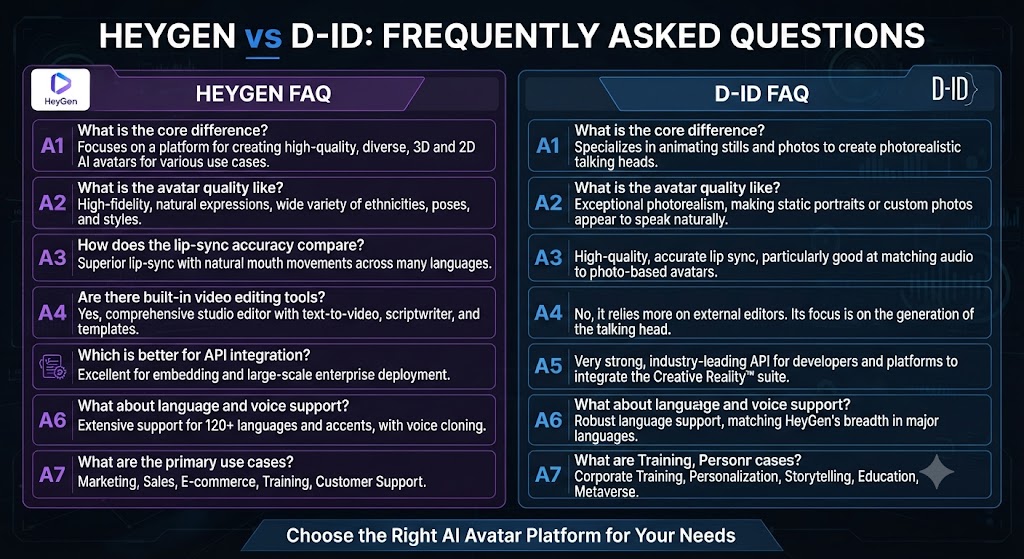
Is HeyGen better than D-ID? Looking at HeyGen vs D-ID details, for avatar realism, lip sync accuracy, and premium video quality, HeyGen generally wins. For entry pricing, API accessibility, and interactive avatar development, D-ID is the stronger fit.
Which is cheaper, HeyGen or D-ID? When it comes to this tool, this HeyGen vs D-ID found that d-ID’s Pro plan at $24.99/month is slightly cheaper than HeyGen’s Creator tier at $29/month, though HeyGen’s credit allocations tend to be more generous at comparable price points.
Does D-ID have a genuinely free plan? For anyone reading this HeyGen vs D-ID, d-ID offers a one-time 20-credit free trial rather than an ongoing monthly free tier. HeyGen’s free plan offers 3 videos per month on an ongoing basis.
Which platform has better lip sync accuracy? This HeyGen vs D-ID found that heyGen, consistently, across independent comparisons — its lip sync is rated outstanding versus D-ID’s good rating, particularly on complex or emotionally varied speech.
Is D-ID’s API easier to use than HeyGen’s? Across this HeyGen vs D-ID, yes, according to independent developer reviews — D-ID’s documentation and pricing structure are generally considered more accessible for developers building avatar video from scratch.
Does either platform support voice cloning? On this point, this HeyGen vs D-ID notes that both do, though HeyGen includes it on all paid plans while D-ID reserves voice cloning for Professional and higher tiers specifically.
These Tools Help You Create. We Help You Go Viral.
Making the video is only half the battle — getting it seen is the other. Tasknestly’s viral video service handles strategy, editing, and distribution.
See Viral Video Services →Conclusion
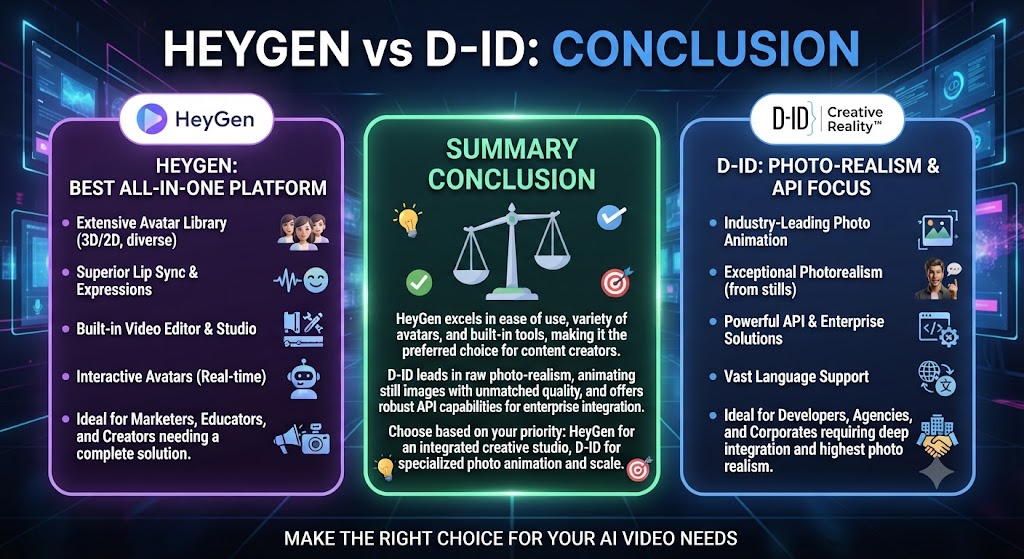
This HeyGen vs D-ID comparison resolves around a genuine tradeoff between quality and accessibility rather than one platform being objectively better. HeyGen consistently wins on the metrics that matter most for premium, client-facing presenter video — avatar realism, lip sync accuracy, facial expression range — and its inclusion of voice cloning across all paid tiers adds further value at the Creator level. D-ID answers with a more accessible entry price, a genuinely developer-friendly API, and the distinctive Agents feature for interactive, real-time avatar deployment.
Within this HeyGen vs D-ID, for marketing teams and creators prioritizing the most convincing video output, HeyGen’s premium positioning is worth the higher price. For developers building avatar video into their own products, or budget-conscious creators testing the category before committing, D-ID’s accessibility genuinely earns its place in the comparison.
Considering the data, this HeyGen vs D-ID shows teams building a broader video content strategy around either platform might also find value in Tasknestly’s digital marketing services for turning finished avatar video into an actual distribution and growth plan.
In the context of pricing, this HeyGen vs D-ID notes both platforms continue to update their models and pricing quickly, so revisit this comparison periodically rather than treating today’s quality gap as fixed through the rest of 2026.
Per this HeyGen vs D-ID, runway and Kaiber do not cover the entire AI avatar video landscape on their own. For teams needing stock-footage-based content repurposing rather than avatar-led presenter video, Pictory solves a genuinely different problem neither HeyGen nor D-ID attempts to address. For teams whose primary need is original cinematic AI generation rather than a presenter format at all, Runway and Luma AI occupy their own distinct category entirely, built around generating footage rather than animating a consistent avatar.
What is genuinely distinct about the HeyGen vs D-ID comparison specifically is how much of the real decision comes down to priorities rather than raw capability gaps. Both platforms can produce professional, usable avatar video from a photo and script — the question is whether your specific use case rewards HeyGen’s quality ceiling or D-ID’s accessibility floor more. Teams evaluating a full AI video stack should think in terms of which specific job needs solving at each stage of content production, rather than assuming either avatar platform should handle every video need across a growing content operation.
As this HeyGen vs D-ID shows, the clearest way to frame the actual purchasing decision is to ask what happens when your content scales. A marketing team producing dozens of client-facing videos monthly will find HeyGen’s quality advantage compounds directly into brand perception, since viewers notice the difference between convincing and merely adequate avatar realism at volume. A development team building a single interactive product feature will find D-ID’s accessible API and Agents feature compound differently, rewarding technical integration work rather than raw per-video output quality.
In this HeyGen vs D-ID, neither platform locks a team into a permanent decision, since both offer meaningful entry points before serious financial commitment — HeyGen’s free tier and D-ID’s trial credits both provide genuine ways to test fit before choosing. A final practical consideration worth naming directly: teams occasionally need both platforms for genuinely different projects, using HeyGen for premium client-facing content and D-ID specifically when an interactive, developer-built avatar experience is the actual deliverable rather than a simple presenter video.
It helps to map out a month of expected content production before committing to a tier. The theoretical monthly allowance rarely matches real usage once revisions and iteration are factored in.
Budget a buffer above your baseline estimate. That avoids hitting a plan ceiling mid-month and being forced into an unplanned upgrade.
Pricing keeps shifting across AI video tools in 2026, so a plan that fits today may not fit by your next renewal. A little margin now avoids a scramble later.
Consider how your team actually consumes video output once it’s produced. The best tool on paper isn’t always best for the people who review, approve, and publish it during a busy week.
A workflow needing three rounds of revision before sign-off delivers less real value than a less polished workflow approved on the first pass. That approval friction rarely shows up on a pricing page — but it shows up constantly in team calendars.
Factor in who reviews the work, how fast they respond, and whether revisions are quick or painful before choosing between these two platforms.
A final practical consideration worth naming directly: teams occasionally need both platforms for genuinely different reasons within the same broader video strategy, using one for premium client-facing content and the other specifically when an accessible entry price or developer integration is the actual priority rather than raw output quality alone. Planning for that kind of mixed toolkit from the outset, rather than assuming a single avatar platform will cover every video need indefinitely, tends to produce a more resilient content strategy than betting everything on one subscription.
One more angle worth considering before committing to either platform’s annual billing: how quickly your team can realistically produce a finished, approved avatar video from first draft to publish, since the theoretically best-quality tool on paper is not always the fastest tool once script revisions, avatar selection, voice tuning, and internal approval cycles are honestly factored into an actual production timeline rather than judged purely against a single polished demo video.
None of this changes the fundamental fit question this whole comparison genuinely started with right from the very beginning of this entire article right here today still — premium realism favors one platform, accessible pricing and developer flexibility favor the other, and no amount of feature-list detail should override that basic priority mismatch when choosing between the two for a real, ongoing production need.
These Tools Help You Create. We Help You Go Viral.
Making the video is only half the battle — getting it seen is the other. Tasknestly’s viral video service handles strategy, editing, and distribution.
See Viral Video Services →