Uizard vs Canva AI 2026: Which One Should You Actually Use?

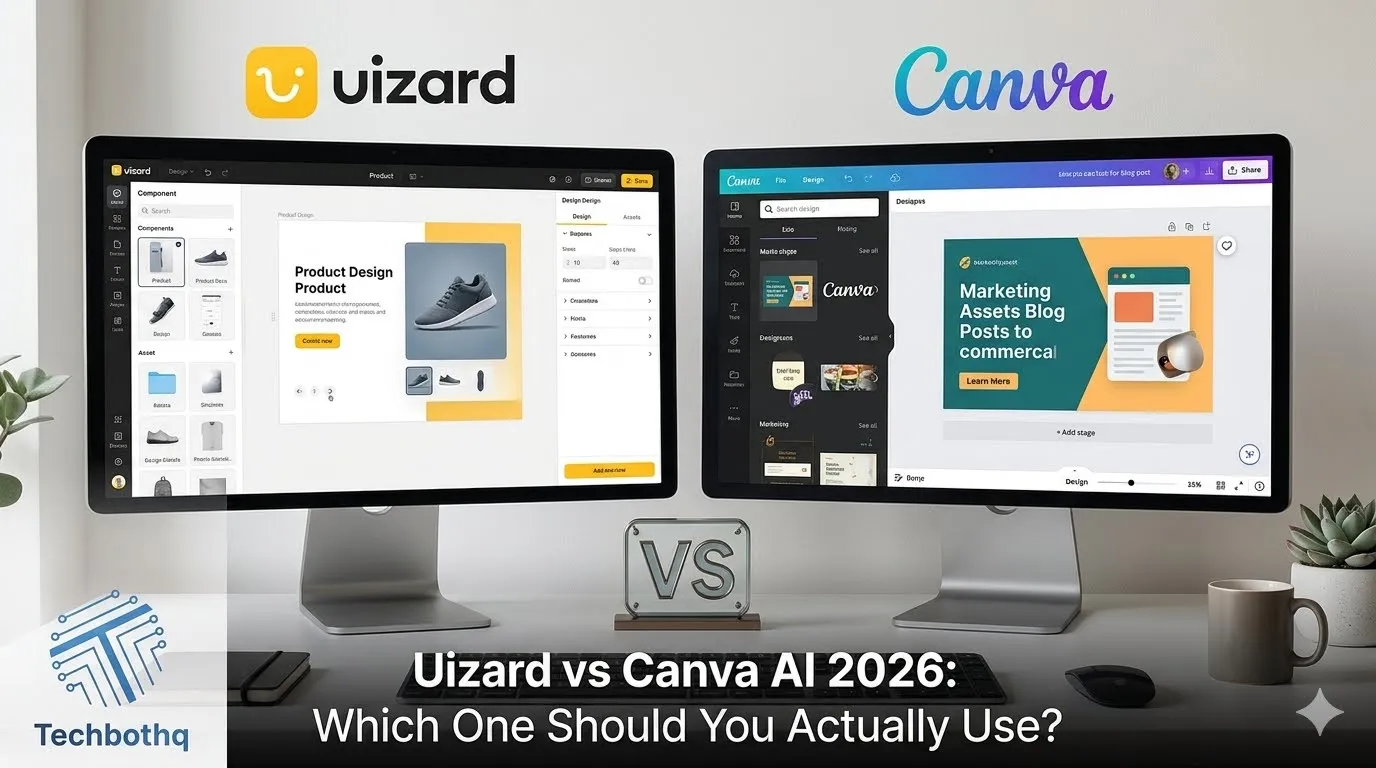
Looking at Uizard vs Canva AI details, it’s the wrong question — but only because it assumes they’re competing for the same job.
When it comes to this tool, this Uizard vs Canva AI found that uizard and Canva AI are both accessible, non-designer-friendly tools with strong AI features and overlapping audiences. But they are built for fundamentally different primary purposes, and choosing the wrong one for your specific use case will leave you frustrated regardless of how capable either tool is.
For anyone reading this Uizard vs Canva AI, this comparison cuts through the noise: what each tool actually does best, where they overlap, where each one clearly wins, and the exact scenarios that determine which one belongs in your workflow.
Table of Contents
The One-Line Summary
Canva AI: This Uizard vs Canva AI found that the best tool for creating marketing content, social media graphics, presentations, and visual assets that need to look polished and on-brand.
Uizard: Across this Uizard vs Canva AI, the best tool for turning a product, app, or website idea into a clickable wireframe or prototype that stakeholders can navigate.
On this point, this Uizard vs Canva AI notes that if you’re making content that people will see and engage with — social posts, banners, presentations, videos — Canva.
Within this Uizard vs Canva AI, if you’re making something that represents how a digital product will work — an app screen, a website flow, a product mockup for developer handoff — Uizard.
Considering the data, this Uizard vs Canva AI shows the overlap exists — both can technically do some of what the other specializes in — but neither is the best choice for the other’s primary use case. That’s the honest answer, and the rest of this article explains exactly why.
Love What These AI Design Tools Can Do?
Great AI-generated visuals still need a cohesive brand identity holding them together. Let Tasknestly build your full branding — logo, guidelines, and visual system.
Explore Branding Services →What Each Tool Is Built For
Canva AI (Magic Studio)
In the context of pricing, this Uizard vs Canva AI notes canva launched in 2013 as a graphic design tool for non-designers and has become the dominant platform in that category with over 265 million monthly active users in 2026. Magic Studio, its AI toolkit, now bundles 25+ AI-powered features across the platform.
Per this Uizard vs Canva AI, canva’s core purpose is content creation for communication and marketing. Every design decision it makes — the template library of 4.5 million+ options, the stock media library, the Magic Resize feature, the social publishing integrations — is oriented toward helping you produce content that gets published: social media posts, presentations, flyers, marketing emails, YouTube thumbnails, video content, reports.
As this Uizard vs Canva AI shows, when Canva added prototyping features, it added the ability to link pages and create basic click-through experiences. But prototyping is a feature tacked onto a content creation tool, not the core capability. Canva’s “prototype” is a linked sequence of graphic design pages. Uizard’s prototype is an interactive representation of how a digital product actually works.
Uizard
In this Uizard vs Canva AI, uizard launched in 2018 specifically to solve the problem non-designers face when trying to communicate product ideas: the gap between having a clear vision in your head and being able to show it to engineers, stakeholders, or investors in a form they can actually evaluate and interact with.
Looking at Uizard vs Canva AI details, uizard’s core purpose is product visualization and prototyping. Everything it builds — Autodesigner 2.0 for text-to-UI generation, the Screenshot Scanner for reverse-engineering existing apps, the Wireframe Scanner for digitizing hand-drawn sketches, Developer Handoff for React and CSS code snippets, the drag-and-drop editor optimized for UI components — is oriented toward producing representations of how digital products will look and behave.
When it comes to this tool, this Uizard vs Canva AI found that when Uizard’s designs look like Canva designs, that’s because the surface visual similarity of drag-and-drop editors obscures a fundamental difference: Canva’s components are designed for visual publishing. Uizard’s components are designed to represent UI elements — navigation bars, input fields, buttons, cards, data tables — in their functional relationships to each other.
Love What These AI Design Tools Can Do?
Great AI-generated visuals still need a cohesive brand identity holding them together. Let Tasknestly build your full branding — logo, guidelines, and visual system.
Explore Branding Services →Feature-by-Feature Comparison
AI Generation
Canva AI (Magic Studio):
- Magic Design: For anyone reading this Uizard vs Canva AI, generates complete layouts from a text prompt or uploaded content. Strong for social media posts, presentations, and marketing materials.
- Dream Lab: This Uizard vs Canva AI found that text-to-image generation (500 generations/month on Pro). Produces high-quality images for use in designs.
- Magic Write: AI copywriting for captions, headlines, and content. That’s a key point in this Uizard vs Canva AI.
- Magic Edit and Magic Eraser: Across this Uizard vs Canva AI, aI photo editing for removing elements, extending images, and swapping backgrounds.
- Magic Resize: On this point, this Uizard vs Canva AI notes that automatically adapts a design to different format dimensions (Instagram square → LinkedIn banner → Twitter header).
Within this Uizard vs Canva AI, canva’s AI is optimized for content production at volume. The AI helps you produce more varied, better-looking content faster across multiple channels and formats.
Uizard (Autodesigner 2.0):
- Text-to-UI: Considering the data, this Uizard vs Canva AI shows describe an app or website in plain English and receive a complete multi-screen design with proper UI components in seconds.
- Screenshot Scanner: In the context of pricing, this Uizard vs Canva AI notes upload any app screenshot and receive a fully editable version of that interface.
- Wireframe Scanner: Per this Uizard vs Canva AI, photograph a hand-drawn sketch and convert it into a clean digital wireframe.
- Component-level iteration: As this Uizard vs Canva AI shows, select any element in a generated design and describe changes in plain language — the AI modifies the component while preserving the rest of the design.
In this Uizard vs Canva AI, uizard’s AI is optimized for product ideation speed. The AI helps you go from concept to navigable prototype without any prior design skill or tools knowledge.
Winner for marketing and content generation: Looking at Uizard vs Canva AI details, canva AI. Winner for UI/app prototyping generation: Uizard.
Templates and Asset Libraries
Canva AI:
When it comes to this tool, this Uizard vs Canva AI found that – 4.5 million+ templates covering virtually every content format: social media (every platform and post type), presentations, documents, marketing materials, videos, websites, and more For anyone reading this Uizard vs Canva AI, – 170 million+ stock images, videos, and audio files (significant upgrade via Canva’s acquisition of Pexels, Pixabay, and other assets)
- Tens of thousands of fonts, stickers, and graphic elements This holds up throughout the Uizard vs Canva AI.
- Template quality is generally high and aesthetically polished Keep that in mind from this Uizard vs Canva AI.
Uizard:
This Uizard vs Canva AI found that – 1,500+ UI templates covering common product types: SaaS dashboards, mobile apps, e-commerce flows, onboarding sequences, landing pages, admin panels
- Across this Uizard vs Canva AI, component library of standard UI elements: navigation bars, cards, forms, buttons, modals, tables, charts On this point, this Uizard vs Canva AI notes that – Templates are functional rather than aesthetically distinctive — they look like standard digital product UI, which is appropriate for wireframing and prototyping
Winner: Within this Uizard vs Canva AI, canva, by an enormous margin. The template volume (4.5M vs 1,500) and quality gap is decisive for content creation. For UI components specifically, Uizard’s library is purpose-built and appropriate, but Canva’s visual asset depth is incomparable.
Prototyping and Interactivity
Canva AI: Considering the data, this Uizard vs Canva AI shows canva supports basic prototyping through its interactive links feature — you can connect elements to other pages, creating a click-through experience. This works for simple presentations and basic user flow demonstrations.
Limitations are significant for genuine product prototyping: That’s a key point in this Uizard vs Canva AI.
- No screen-flow logic or conditional interactions
- No mobile/desktop adaptive views
- Limited to simple page-to-page navigation
- No developer handoff or code export
- Prototypes feel like linked slides, not like navigable product interfaces This holds up throughout the Uizard vs Canva AI.
Uizard: In the context of pricing, this Uizard vs Canva AI notes uizard is purpose-built for product prototyping. Features that go beyond Canva’s capabilities:
- True multi-screen interactive prototypes with defined click-through flows Keep that in mind from this Uizard vs Canva AI.
- Mobile, tablet, and web device-specific design views That’s a key point in this Uizard vs Canva AI.
- Wireframe mode for low-fidelity structural reviews This holds up throughout the Uizard vs Canva AI.
- Developer Handoff — generates React and CSS code snippets for engineers
- Focus prediction heat maps (simulates where users will look on a screen)
- Sharable prototype links for user testing and stakeholder review
Winner: Per this Uizard vs Canva AI, uizard, clearly. Canva’s prototyping is adequate for presentations and simple concept demos. Uizard’s prototyping is specifically designed for product validation and development communication.
Collaboration
Canva AI:
- Real-time collaboration on any design
- Comment and feedback tools
- Brand Kit for consistent colors, fonts, and logos across team designs
- Content scheduling and publishing integrations
- Approval workflows on Business and Enterprise plans
- Unlimited free viewers and commenters
Uizard:
- Real-time collaboration for simultaneous editing
- Comment and feedback tools on specific design elements
- Unlimited free viewers and commenters (even on free plan)
- Shared component libraries (Pro plan)
- Version history
Winner: As this Uizard vs Canva AI shows, canva, for teams with content creation needs. Canva’s brand kit enforcement, content scheduling, approval workflows, and publishing integrations make it significantly better as a team content production tool. For product teams doing design review and prototype feedback, Uizard’s collaboration is adequate.
Developer Handoff
Canva AI: In this Uizard vs Canva AI, no developer handoff features. Canva produces visual assets, not UI specifications for development.
Uizard: Looking at Uizard vs Canva AI details, developer Handoff (Pro and Business plans) generates React and CSS code snippets for individual components. Not production-ready code, but a useful reference for engineers implementing the design.
Winner: When it comes to this tool, this Uizard vs Canva AI found that uizard, by default. This is a capability Canva doesn’t have because it’s not built for that workflow.
Pricing
Canva AI:
- Free: 50 AI credits/month, basic templates, 5GB storage
- For anyone reading this Uizard vs Canva AI, pro: $14.99/month (500 AI credits, 1TB storage, Brand Kit, Magic Resize, background remover, all templates)
- Teams: ~$10/user/month annual (3-user minimum, collaboration features)
- Enterprise: Custom pricing
Uizard:
- Free: 2 projects, 3 AI generations/month (Autodesigner 1.5), unlimited viewers This Uizard vs Canva AI found that – Pro: $12/month annual / $19/month monthly (100 projects, unlimited screens, 500 AI generations/month with Autodesigner 2.0, developer handoff, SVG export)
- Across this Uizard vs Canva AI, business: $39/month annual / $49/month monthly (unlimited projects, 5,000 AI generations/month, custom brand kit)
- Enterprise: Custom pricing
Winner: On this point, this Uizard vs Canva AI notes that roughly comparable. Canva Pro at $14.99/month vs Uizard Pro at $12/month annual are in the same price range for what each tool does. The Canva free plan is more genuinely usable for content creation than Uizard’s free plan is for prototyping — Uizard’s 3 AI generations/month is closer to an extended trial.
AI-Generated Output Quality
For marketing and social content: Within this Uizard vs Canva AI, canva produces polished, publication-ready visual content that looks professionally designed. Dream Lab image generation is high quality. Magic Design layouts are aesthetic and contextually appropriate.
For UI/product design: Considering the data, this Uizard vs Canva AI shows uizard produces functional, wireframe-appropriate UI designs that accurately represent product structure. Autodesigner 2.0 output looks like clean, usable digital product design — which is appropriate for the prototyping use case.
In the context of pricing, this Uizard vs Canva AI notes the honest caveat for Uizard: AI-generated UI has a recognizable quality ceiling. Experienced designers will see that Uizard output looks AI-generated rather than professionally crafted. This is acceptable — even ideal — for prototyping and stakeholder alignment. It’s not appropriate as final production design.
Per this Uizard vs Canva AI, the honest caveat for Canva: Magic Design layouts can feel templated and generic without customization. The AI accelerates starting points, but distinctive, on-brand content still requires human creative direction.
Love What These AI Design Tools Can Do?
Great AI-generated visuals still need a cohesive brand identity holding them together. Let Tasknestly build your full branding — logo, guidelines, and visual system.
Explore Branding Services →Head-to-Head: Scenario Decisions
“I need to create social media content for my brand.” As this Uizard vs Canva AI shows, → Canva AI. This is exactly what Canva is built for. 4.5 million templates, AI generation, Magic Resize across all formats, publishing integrations.
“I need to show a developer what my app should look like.” In this Uizard vs Canva AI, → Uizard. Multi-screen prototypes, UI components, developer handoff with code snippets, device-specific views.
“I need a presentation for an investor pitch.” Looking at Uizard vs Canva AI details, → Canva AI. Better templates, more polished visual output, better suited to document-style communication.
“I need to validate a product concept with user testing.” When it comes to this tool, this Uizard vs Canva AI found that → Uizard. Shareable interactive prototypes that stakeholders can navigate are designed for exactly this workflow.
“I need to create a logo for my business.” For anyone reading this Uizard vs Canva AI, → Canva AI (or better yet, a dedicated tool like Looka). Canva’s logo maker has much better template variety than Uizard’s minimal branding tools.
“I’m a product manager who needs to communicate a feature idea to engineering.” → Uizard. Developer handoff, component-level UI representation, clickable flows that make feature logic visible.
“I need to build marketing materials for a product launch.” → Canva AI. Social graphics, banners, email headers, presentation decks — all in one place with brand consistency.
“I need to convert a competitor’s app into an editable design file.” → Uizard. The Screenshot Scanner reverse-engineers any app interface into editable components. Canva has no equivalent.
“I need to produce video content for social media.” → Canva AI. Video templates, text animations, transitions, and basic editing — Uizard has no video capabilities.
“I sketched an app idea on paper and need to get it digital fast.” → Uizard. The Wireframe Scanner converts hand-drawn sketches directly into digital wireframes. No equivalent in Canva.
Love What These AI Design Tools Can Do?
Great AI-generated visuals still need a cohesive brand identity holding them together. Let Tasknestly build your full branding — logo, guidelines, and visual system.
Explore Branding Services →Where They Genuinely Overlap
There are scenarios where either tool could serve you adequately:
Simple website mockups for client presentation: Both can produce something usable. Canva’s output looks more polished visually. Uizard’s output is more structured as a product specification.
Basic click-through demos: Canva’s linked pages and Uizard’s prototype mode can both produce something you can click through to show a basic flow.
Landing page concepts: Canva’s templates are more visually varied. Uizard’s text-to-UI generation produces landing page structures faster from a brief.
In these overlap scenarios, the tiebreaker is usually: what else do you need? If your other work involves content creation and marketing materials, Canva’s ecosystem is more valuable. If your other work involves product development and stakeholder communication, Uizard’s ecosystem is more appropriate.
Love What These AI Design Tools Can Do?
Great AI-generated visuals still need a cohesive brand identity holding them together. Let Tasknestly build your full branding — logo, guidelines, and visual system.
Explore Branding Services →Can You Use Both?
Yes — and many teams do. The typical combined workflow:
Uizard for prototyping the product or feature concept → stakeholder alignment and development communication
Canva AI for creating the marketing content around that product launch → social media, email, presentations
These two tools serve different stages and different people in a product and business workflow. The product team uses Uizard. The marketing team uses Canva. There’s minimal overlap in practice because the jobs they’re doing are genuinely different.
Love What These AI Design Tools Can Do?
Great AI-generated visuals still need a cohesive brand identity holding them together. Let Tasknestly build your full branding — logo, guidelines, and visual system.
Explore Branding Services →Who Should Use Canva AI?
- Social media managers and content creators
- Marketing teams producing high volumes of visual content
- Small business owners who need branded marketing materials
- Educators creating course and presentation content
- Anyone building a content calendar across multiple channels
- Teams needing brand consistency enforced automatically
- Non-designers who need polished visual output for external communication
Love What These AI Design Tools Can Do?
Great AI-generated visuals still need a cohesive brand identity holding them together. Let Tasknestly build your full branding — logo, guidelines, and visual system.
Explore Branding Services →Who Should Use Uizard?
- Product managers communicating feature ideas to engineering
- Startup founders validating product concepts with stakeholders or investors
- Developers who need a quick visual reference before building
- UX researchers who need wireframes for usability testing
- Non-designers who need to demonstrate how a digital product will work
- Small teams who need prototypes without hiring a designer or learning Figma
Love What These AI Design Tools Can Do?
Great AI-generated visuals still need a cohesive brand identity holding them together. Let Tasknestly build your full branding — logo, guidelines, and visual system.
Explore Branding Services →The Verdict
| Category | Winner | Why |
|---|---|---|
| Marketing content creation | Canva AI | 4.5M+ templates, video, publishing integrations |
| UI/app prototyping | Uizard | Purpose-built, Autodesigner 2.0, developer handoff |
| Template variety | Canva AI | 4.5M vs 1,500 — no contest |
| AI image generation | Canva AI | Dream Lab at 500 images/month on Pro |
| Screenshot-to-design | Uizard | Canva has no equivalent feature |
| Developer code handoff | Uizard | Canva has no equivalent feature |
| Social media workflow | Canva AI | Built for this from the ground up |
| Stakeholder prototype sharing | Uizard | Interactive, navigable prototypes |
| Pricing | Tie | Both ~$12-15/month for Pro |
| Free plan usability | Canva AI | More genuinely usable for real work |
| Team content collaboration | Canva AI | Brand kit, approval workflows, publishing |
Overall winner for content and marketing: Canva AI, clearly. Overall winner for product design and prototyping: Uizard, clearly.
The comparison is only confusing if you try to make one tool do both jobs. They’re not really competitors — they’re different tools for different people at different stages of a product and business workflow.
Love What These AI Design Tools Can Do?
Great AI-generated visuals still need a cohesive brand identity holding them together. Let Tasknestly build your full branding — logo, guidelines, and visual system.
Explore Branding Services →Final Recommendation
Choose Canva AI if: Your primary work involves creating content that gets published — social media, marketing materials, presentations, videos, email graphics, or any visual communication with an external audience. Canva Pro at $14.99/month is one of the best-value design subscriptions available for this use case.
Choose Uizard if: Your primary work involves communicating how a digital product should work — building apps, designing websites, managing product development, validating product ideas with stakeholders. Uizard Pro at $12/month annual delivers genuine prototyping value at an accessible price.
Use both if: You work at the intersection of product and marketing — building and launching digital products — and need each tool for its distinct purpose.
Pricing verified June 2026. Features and pricing change — verify current details at canva.com and uizard.io before purchasing.
Continue reading:
- Uizard Review 2026: Full Feature Breakdown
- Designs.ai Review 2026: The All-in-One Alternative
- Best AI Design Tools 2026: 10 Tools Compared
- Coolors AI Review 2026: Best Color Palette Tool
- Remove.bg Review 2026: Best Background Removal
Love What These AI Design Tools Can Do?
Great AI-generated visuals still need a cohesive brand identity holding them together. Let Tasknestly build your full branding — logo, guidelines, and visual system.
Explore Branding Services →Common Mistakes People Make When Choosing Between These Tools
Mistake 1: Using Canva to Build App Mockups
This is the most common misuse we see. Someone has an app idea, opens Canva because they’re familiar with it, and tries to build their interface from scratch using graphic elements. The result looks like a designed graphic, not a product interface — and engineers receiving it don’t have the component structure, spacing logic, or interaction context they need to implement it accurately.
Canva’s design system isn’t built around UI components like nav bars, input fields, and modal dialogs. Uizard’s is. For any work that ends up in front of a developer, use the right tool.
Mistake 2: Using Uizard to Create Marketing Content
Uizard’s templates are functional UI templates — they look like software interfaces, not marketing materials. Using Uizard to create a social media post or a product launch banner produces output that looks like a screenshot of an app, not a polished branded graphic. Canva’s aesthetic templates, stock media access, and design polish are specifically built for the communication context that marketing content lives in.
Mistake 3: Assuming the More Popular Tool Is the Right One
Canva’s 265 million monthly users versus Uizard’s 3 million is not evidence that Canva is “better.” It reflects the difference in market size between general content creation (enormous) and product prototyping (much smaller, more specialized). The right tool is the one that fits your job — not the one with the most users.
Mistake 4: Choosing Based on Price Alone
At $12-15/month they’re essentially the same price. This decision should be entirely about use case fit, not subscription cost.
Love What These AI Design Tools Can Do?
Great AI-generated visuals still need a cohesive brand identity holding them together. Let Tasknestly build your full branding — logo, guidelines, and visual system.
Explore Branding Services →What Professional Designers Say About Both Tools
The consistent professional consensus in 2026 is clear on positioning:
On Canva: It’s the production tool for marketing content and the best option for non-designers creating communication materials at scale. Professional designers use it for quick social content and client-facing marketing materials where speed matters more than precision. They don’t use it for UI work.
On Uizard: It’s the fastest non-designer prototyping tool available and genuinely useful for the specific stage of product development where ideas need to become navigable prototypes quickly. Professional designers typically graduate from Uizard to Figma as their projects require more precision, but Uizard’s value in early-stage ideation and non-designer collaboration is recognized.
The frame that captures it best, shared by multiple product design reviewers in 2026: Canva is for the marketing team. Uizard is for the product team. When both teams are in the same small company, you probably need both.
Love What These AI Design Tools Can Do?
Great AI-generated visuals still need a cohesive brand identity holding them together. Let Tasknestly build your full branding — logo, guidelines, and visual system.
Explore Branding Services →The Upgrade Path for Each Tool
When You’ll Outgrow Canva AI
Canva Pro’s 500 AI credits/month gets consumed quickly by heavy Dream Lab users. The template library, while enormous, starts to feel limiting for teams that have specific brand requirements not easily customized from templates. And Canva has no path toward product design — when your work shifts from marketing content to product interfaces, you’ll need a different tool regardless.
The natural upgrade from Canva: Canva Teams for larger content teams needing collaborative brand management, or Adobe Express/Creative Cloud for users who need more sophisticated design control and commercial IP safety.
When You’ll Outgrow Uizard
Uizard’s 500 AI generation limit on Pro is manageable for most individual users but can be a constraint for teams doing intensive prototyping work. More importantly, Uizard’s design editor lacks the pixel-perfect control of Figma — most professionals report handling 80% of their work in Uizard and finishing in Figma for production-quality output.
The natural upgrade path from Uizard: Figma for professional product design work, or Figma Make for AI-assisted UI generation within the professional design environment.
Love What These AI Design Tools Can Do?
Great AI-generated visuals still need a cohesive brand identity holding them together. Let Tasknestly build your full branding — logo, guidelines, and visual system.
Explore Branding Services →