Physical Address
304 North Cardinal St.
Dorchester Center, MA 02124
Physical Address
304 North Cardinal St.
Dorchester Center, MA 02124

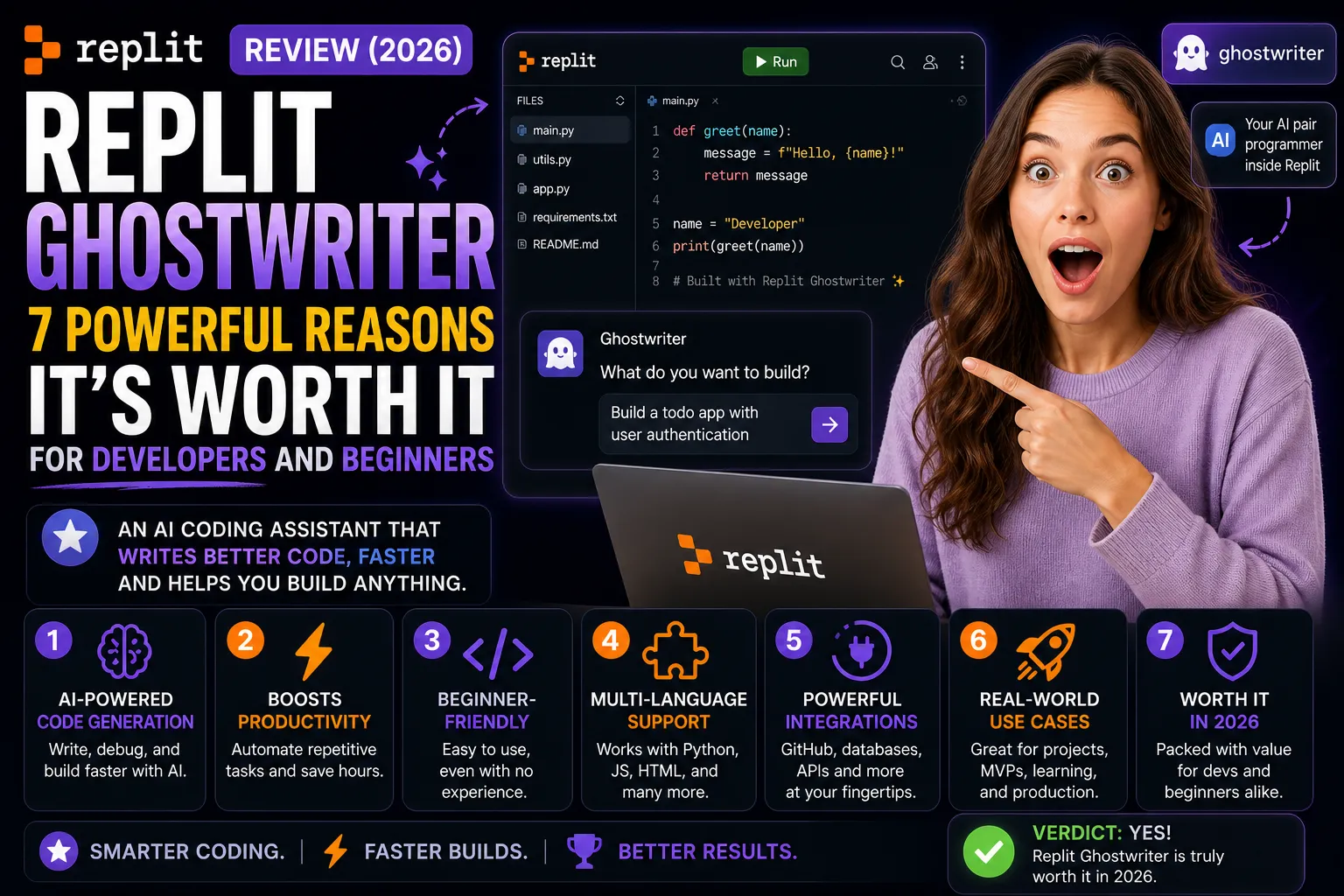
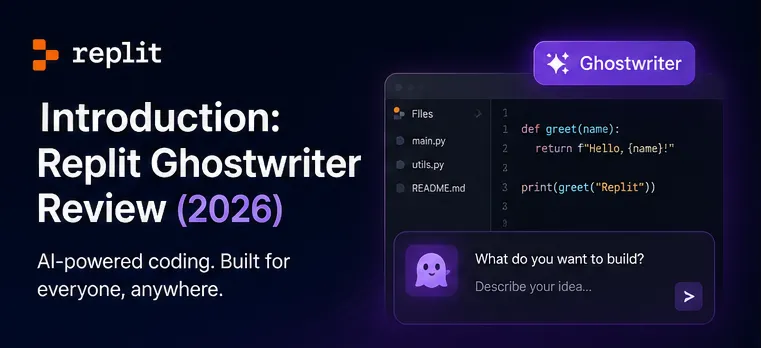
Replit Ghostwriter review — if you’re looking for an AI coding assistant that works directly inside your browser without complex setup, you’ve probably come across Replit. In this Replit Ghostwriter review, we explore how the platform has evolved over the past year from a simple online IDE into a full AI-powered development environment, with Ghostwriter at the center of that transformation.
The promise is simple: describe what you want, and the AI helps you build it — whether that’s a script, a web app, or even a mobile-ready project. But in this Replit Ghostwriter review, the real question is whether it actually delivers on that promise. And more importantly, is it worth your time (and money) in 2026?
This detailed Replit Ghostwriter review is based on real-world usage, combined with verified insights from user experiences and platform capabilities. By the end of this Replit Ghostwriter review, you’ll understand exactly how it works, what it does well, where it struggles, and whether it’s the right tool for you.
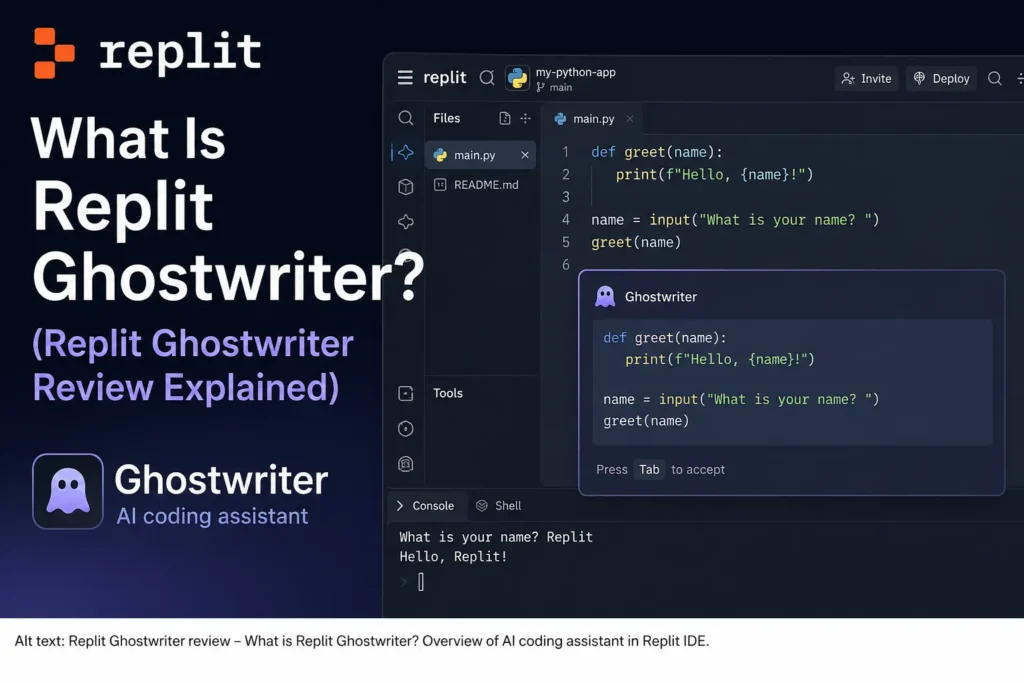
In this Replit Ghostwriter review, Ghostwriter is an AI-powered coding assistant built directly into the Replit development environment. Unlike standalone tools, it operates inside a full cloud IDE, meaning you can write, run, debug, and deploy your code in one place — a key highlight of this Replit Ghostwriter review.
At its core, Ghostwriter helps with:
What makes it different, as highlighted in this Replit Ghostwriter review, is the all-in-one ecosystem. You’re not just generating code — you’re building, testing, and deploying within the same platform.
Replit itself supports 50+ programming languages, including Python, JavaScript, C++, and more. This flexibility is one of the main strengths mentioned throughout this Replit Ghostwriter review, making it suitable for both beginners and experienced developers.
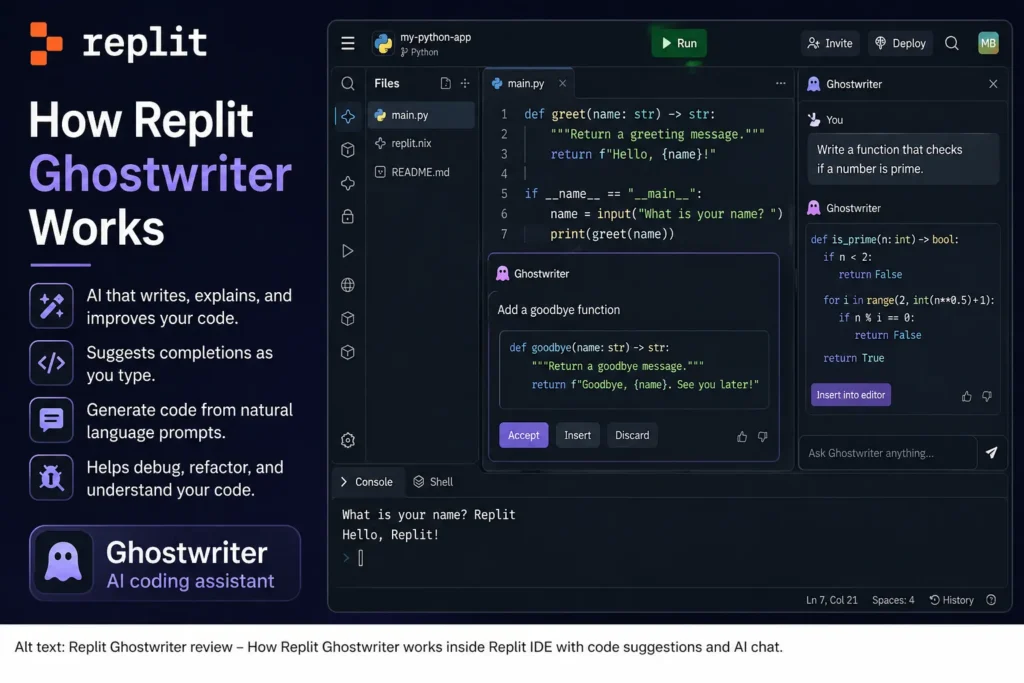
Replit Ghostwriter works through a combination of AI models integrated into the coding environment. You interact with it in three main ways:
As you type, Ghostwriter predicts and completes your code — similar to autocomplete but far more advanced.
You can describe what you want in plain English, and the AI generates full code blocks or even entire features.
A built-in chat lets you ask questions, debug issues, or improve code without leaving your IDE.
The system also integrates deeply with your project files, meaning it understands context — not just isolated code snippets.
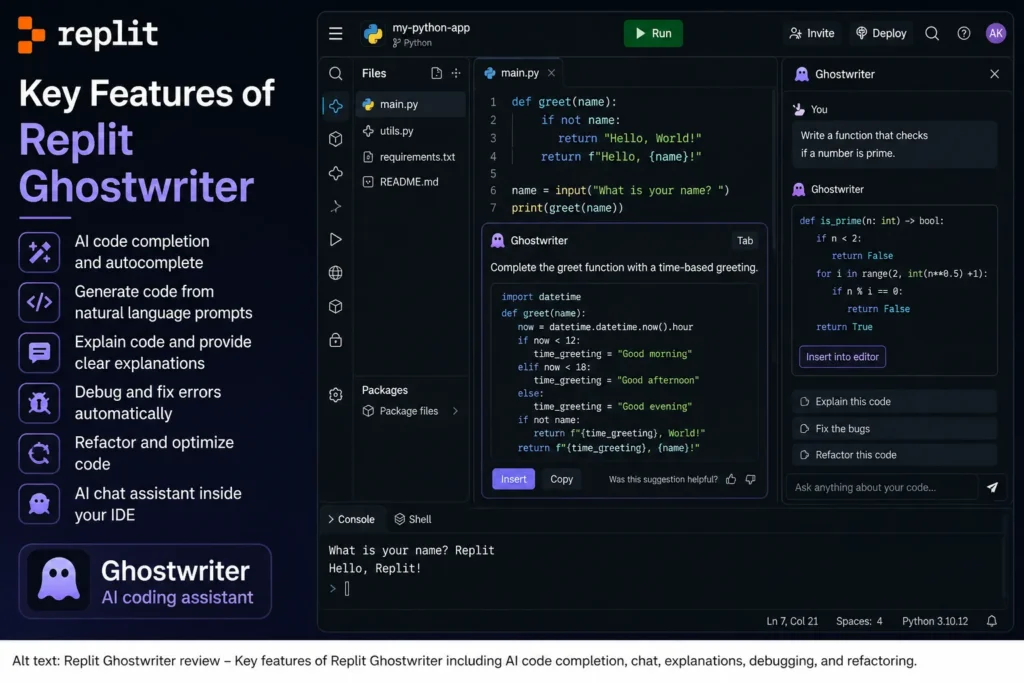
One of the most valuable features of Ghostwriter is its real-time code suggestion system, which helps developers write code faster and more efficiently.
Unlike traditional autocomplete tools that typically predict only the next word or line, Ghostwriter is designed to understand broader context and generate meaningful code suggestions while you work. As you type, the AI continuously analyzes your code and provides recommendations that often extend far beyond simple syntax completion.
This capability allows developers to maintain focus and momentum without constantly stopping to write repetitive code structures manually.
Some of the key benefits include:
• Predicting entire functions
• Understanding context across files
• Reducing repetitive coding tasks
• Accelerating feature development
• Improving workflow efficiency
• Minimizing manual typing
One of the most impressive aspects is its ability to predict complete implementations. Instead of generating a few words at a time, Ghostwriter can often create entire functions, utility methods, data structures, and logical workflows based on the surrounding code and developer intent.
For example, a developer may begin creating an API endpoint, database query, or validation system, and Ghostwriter can automatically generate much of the required implementation before the task is fully completed.
The system also benefits from contextual awareness. By understanding more than just the current line, Ghostwriter can provide suggestions that better align with the structure and requirements of the project. This helps reduce the amount of editing needed after accepting generated code.
This makes the replit ai coding tool particularly useful for projects involving multiple files and interconnected components. Instead of treating each file independently, the AI can leverage broader project context to generate more accurate and relevant suggestions.
Developers can use this feature for:
• Web applications
• API development
• Automation scripts
• SaaS products
• Educational projects
• Full-stack applications
• Database-driven systems
Another major advantage is productivity. Repetitive coding tasks often consume a significant portion of development time. By automating these routine activities, Ghostwriter allows developers to focus on problem-solving, architecture, and feature design rather than boilerplate implementation.
For beginners, the feature can also provide educational value. By observing AI-generated solutions, developers can learn coding patterns, best practices, and framework conventions more quickly.
Compared to traditional autocomplete systems, Ghostwriter feels much more intelligent and proactive. Rather than acting as a simple helper, it often feels like a collaborative development partner that understands what you’re trying to build and assists throughout the process.
This is one of the reasons many users consider the replit ai coding tool a major productivity booster. Its ability to generate substantial amounts of code, understand project context, and reduce repetitive work helps developers build applications faster while maintaining a smooth and efficient workflow.
Overall, Ghostwriter’s real-time suggestion system is one of its strongest features. By predicting entire functions, understanding context across files, and streamlining development tasks, it significantly accelerates coding while making the overall development experience more productive and enjoyable.
One of the biggest strengths of Ghostwriter is its ability to transform natural language instructions into working code.
Instead of manually designing every component from scratch, developers can describe what they want in plain English and allow the AI to generate an initial implementation. This dramatically reduces the time required to move from an idea to a functioning application.
For example, developers can enter requests such as:
• Build a login system
• Create a REST API with authentication
• Make a to-do app in React
• Create a user dashboard with analytics
• Build a product inventory manager
• Generate a chatbot interface
Ghostwriter then analyzes the request and produces structured code that can serve as the foundation for a working project.
One of the most impressive aspects of this functionality is how quickly it can generate usable results. Rather than starting with an empty project and building every component manually, developers receive an initial framework that can be refined and expanded as needed.
Among the most useful replit ghostwriter features is its ability to understand intent rather than requiring detailed technical instructions. Users can focus on describing the desired outcome while the AI handles much of the implementation process behind the scenes.
This capability is especially valuable for:
• Rapid prototyping
• MVP development
• Startup projects
• Educational projects
• Internal business tools
• Web application development
• API creation
• Automation workflows
The feature also lowers the barrier to entry for newer developers. Beginners can create functional projects more quickly while learning how different components work together. By reviewing generated code, users gain exposure to programming concepts, structures, and best practices that might otherwise take much longer to learn.
Experienced developers benefit as well because repetitive setup work can be completed in minutes rather than hours. Instead of spending valuable time building standard project foundations, they can focus on customization, optimization, and business-specific functionality.
This aligns with real user experiences, where many developers report building functional applications in surprisingly short timeframes using Replit’s AI capabilities. Tasks that traditionally required extensive manual coding can often be accelerated significantly through AI-assisted development.
Another advantage is iteration speed. Once the initial project has been generated, developers can continue refining features using additional prompts and instructions. This creates a highly interactive workflow where ideas can be tested, modified, and improved rapidly.
Many users consider these replit ghostwriter features among the platform’s strongest productivity benefits because they help bridge the gap between concept and execution. Rather than spending hours translating ideas into code, developers can quickly create a working foundation and focus on enhancing the final product.
Overall, Ghostwriter’s natural language code generation capabilities represent one of the most powerful aspects of the platform. By turning simple descriptions into structured applications, it enables faster development, shorter prototyping cycles, and a more accessible path from idea to implementation.
Ghostwriter doesn’t just write code — it also helps developers understand the code they are working with.
This is one of the most valuable parts of the platform, especially for beginners, students, and developers exploring unfamiliar programming languages or frameworks. Instead of simply generating code and leaving users to figure it out alone, Ghostwriter can explain what the code does, why it works, and how each part connects to the bigger picture.
Users can ask it to:
• Explain functions
• Break down logic step by step
• Understand errors in simple terms
• Describe what specific code blocks do
• Clarify programming concepts
• Suggest better ways to write code
• Help troubleshoot confusing issues
This makes the experience feel more educational than a standard coding tool. For example, if a beginner sees a function they do not fully understand, they can ask Ghostwriter to explain it in plain language. The AI can then break down the logic line by line, making the code easier to follow and learn from.
This is especially useful when working with new programming languages. A developer who already understands JavaScript but is learning Python, for example, can use Ghostwriter to compare syntax, explain unfamiliar patterns, and understand how similar concepts work in a different environment.
For beginners learning programming, this creates a smoother learning experience. Instead of constantly searching tutorials or documentation, they can receive explanations directly inside the coding workspace. This saves time and helps reduce frustration when errors appear.
For experienced developers, the feature is useful when working with unfamiliar codebases, libraries, or frameworks. Ghostwriter can summarize complex logic, explain how a function connects to the rest of the project, and help identify what might be causing an issue.
In this ai coding assistant review, the tutoring ability stands out because it adds real educational value beyond code generation. A tool that only writes code can save time, but a tool that also explains code can help developers become better over time.
This feature is particularly helpful for:
• Beginners learning programming
• Students building projects
• Developers exploring new languages
• Teams onboarding new members
• Programmers debugging unfamiliar code
• Users learning frameworks and libraries
Another major benefit is error explanation. Error messages can be intimidating, especially for new developers. Ghostwriter can translate technical errors into simple explanations, helping users understand what went wrong and how to fix it.
This makes debugging less stressful and more productive. Instead of guessing what an error means, users can ask Ghostwriter for a clear explanation and possible solutions.
Overall, Ghostwriter works like a real-time coding tutor inside the development environment. It helps users write code, understand logic, learn from mistakes, and improve their programming skills while building projects. That makes it one of the most useful tools to highlight in any ai coding assistant review, especially for developers who want both productivity and learning support.
Debugging is one of the most time-consuming and sometimes frustrating parts of software development. Even experienced developers can spend hours tracking down a single issue, especially when working with large codebases, unfamiliar frameworks, or complex system interactions.
Ghostwriter helps simplify this process by acting as an intelligent debugging assistant that can analyze problems, suggest solutions, and explain what is actually causing an issue.
Instead of manually searching through documentation, forum posts, and error logs, developers can often get immediate guidance directly inside their development environment.
Ghostwriter can assist by:
• Identifying errors automatically
• Suggesting potential fixes
• Explaining root causes
• Analyzing error messages
• Reviewing problematic code
• Recommending debugging steps
• Highlighting potential logic issues
One of the biggest advantages is speed. When an error occurs, developers typically need to understand what happened before they can fix it. Ghostwriter helps accelerate this process by providing explanations in plain language rather than forcing users to decipher cryptic error messages on their own.
For beginners, this can be especially valuable. Many programming errors are difficult to understand without experience, and new developers often spend more time figuring out the error than fixing it. Ghostwriter can break down complex issues into simpler explanations, helping users learn while solving problems.
The feature is useful for many common development challenges, including:
• Syntax errors
• Runtime exceptions
• API integration problems
• Database issues
• Logic bugs
• Framework-specific errors
• Configuration mistakes
Another major benefit is root cause analysis. Rather than simply pointing out that something is wrong, Ghostwriter often attempts to explain why the problem occurred. This helps developers build stronger debugging skills and reduces the likelihood of repeating the same mistakes in future projects.
For experienced developers, the debugging assistant can serve as a productivity booster. Instead of spending valuable time researching common issues, they can quickly review AI-generated suggestions and focus on implementing the correct solution.
In many situations, Ghostwriter can resolve problems faster than manually searching documentation because it combines code analysis with contextual understanding of the project. This allows it to provide targeted recommendations that are often more relevant than generic search results.
However, it is important to recognize the limitations of AI-assisted debugging.
Ghostwriter is not perfect, and some suggested fixes may introduce new problems, particularly in larger or more complex projects. AI-generated solutions should always be reviewed carefully before being implemented in production environments.
For example, a suggested fix may resolve one issue while unintentionally affecting another part of the application. This is why developer oversight remains essential, regardless of how capable the AI becomes.
The most effective approach is to treat Ghostwriter as a debugging partner rather than a replacement for human judgment. Its suggestions can dramatically reduce troubleshooting time, but final decisions should still be made by the developer.
Overall, Ghostwriter’s debugging capabilities are among its most practical features. By identifying errors, explaining root causes, and suggesting potential fixes, it helps developers solve problems faster while also improving their understanding of how and why those problems occur. This combination of productivity and learning support makes it a valuable tool for both beginners and experienced programmers.
Another valuable capability of Ghostwriter is its ability to improve existing code rather than simply generating new code.
As projects grow, codebases often become more difficult to maintain. Functions get longer, logic becomes more complex, and quick fixes can accumulate over time. While the code may still work correctly, it can become harder to read, update, and scale. Ghostwriter helps address these challenges by analyzing code and suggesting improvements that enhance quality and maintainability.
The AI can help by:
• Making code cleaner and more readable
• Suggesting better project structure
• Optimizing performance
• Reducing unnecessary complexity
• Improving naming conventions
• Eliminating duplicated logic
• Enhancing maintainability
• Recommending best practices
One of the biggest benefits is improved readability. Clean code is easier to understand, debug, and modify in the future. Ghostwriter can identify sections that may be overly complicated and suggest simpler alternatives that achieve the same result while making the code easier to follow.
This is particularly important for team environments where multiple developers work on the same project. Readable code improves collaboration and reduces the time required for onboarding new team members or reviewing contributions.
The platform can also suggest structural improvements. Over time, applications may develop inefficient patterns or poorly organized components. Ghostwriter can recommend ways to reorganize functions, separate concerns, and improve overall architecture without requiring developers to manually review every file.
Performance optimization is another area where the tool can provide value. The AI may identify opportunities to improve efficiency, reduce redundant operations, optimize database interactions, or streamline logic that could impact application performance.
Common areas where these improvements can help include:
• Web applications
• API services
• SaaS platforms
• Mobile applications
• Automation tools
• Enterprise software
• Database-driven systems
One of the most practical advantages is reducing the amount of manual refactoring work required. Refactoring is important for long-term project health, but many developers postpone it because of time constraints. Ghostwriter can accelerate this process by highlighting potential improvements and providing implementation suggestions automatically.
For newer developers, these recommendations can also serve as learning opportunities. By reviewing suggested improvements, users can gain a better understanding of clean coding principles, software design practices, and performance considerations.
Experienced developers benefit as well because routine code quality improvements can often be identified much faster than through manual reviews alone. This allows teams to spend more time building features while still maintaining high coding standards.
Of course, not every suggestion should be accepted automatically. Developers should review recommendations carefully to ensure they align with project requirements and architectural goals. Human judgment remains essential when making decisions about code quality and optimization.
Overall, Ghostwriter’s code improvement capabilities make it more than just a code generation tool. By helping developers create cleaner, more efficient, and more maintainable software, it supports long-term code quality while reducing the effort required to keep projects organized and scalable.
The chat feature is one of the most powerful and practical components of Ghostwriter, transforming it from a simple coding assistant into an interactive development companion.
Modern software development often requires constant research. Developers regularly switch between their editor, documentation websites, forums, tutorials, and search engines to find answers, understand errors, learn frameworks, or discover implementation examples. This constant context switching can interrupt focus and reduce productivity.
Ghostwriter helps solve this problem by bringing AI-powered assistance directly into the development environment.
With the chat feature, developers can:
• Ask coding questions
• Generate new features
• Improve existing code
• Debug problems
• Explain complex functions
• Learn new frameworks
• Get implementation suggestions
• Receive instant answers without leaving the workspace
One of the biggest advantages is convenience. Instead of opening multiple browser tabs and searching for solutions, developers can simply ask a question and receive a response immediately. This keeps them focused on development rather than spending time navigating external resources.
For example, a developer can ask:
• How does this function work?
• Why am I getting this error?
• How can I optimize this code?
• Can you create a new API endpoint?
• What’s the best way to implement authentication?
The AI can then provide explanations, recommendations, code examples, and troubleshooting guidance directly within the workflow.
Another major benefit is faster feature development. Rather than manually researching implementation details, developers can describe what they want to build and receive immediate assistance. This can significantly reduce development time, especially for common features and standard programming tasks.
The feature is also valuable for learning. Developers exploring a new language, framework, or library can ask questions as they work, making the learning process more interactive and efficient. Instead of jumping between documentation pages, explanations are available exactly when needed.
This is particularly useful for:
• Beginners learning programming
• Students working on projects
• Developers exploring new technologies
• Freelancers building client projects
• Startup teams moving quickly
• Experienced engineers solving unfamiliar problems
The ability to improve existing code is another strength. Developers can paste functions, components, or modules into the chat and request suggestions for readability, performance, maintainability, or optimization improvements.
By keeping assistance inside the coding environment, Ghostwriter reduces context switching and helps maintain development momentum. Even small interruptions can impact productivity, and eliminating the need to constantly move between the IDE and external resources can save significant time over the course of a project.
Of course, developers should still validate recommendations and review generated solutions carefully. While the chat assistant is highly useful, human oversight remains important when making architectural, security, and production-related decisions.
Overall, the chat feature is one of Ghostwriter’s most impactful productivity tools. By providing instant answers, coding assistance, debugging support, and feature generation directly inside the workflow, it helps developers work faster, stay focused, and spend less time searching for information outside their development environment.
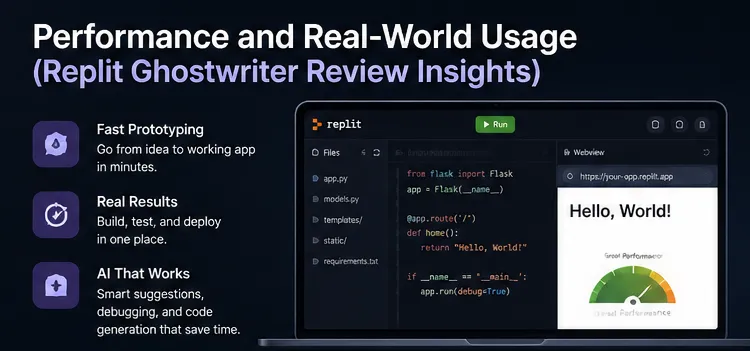
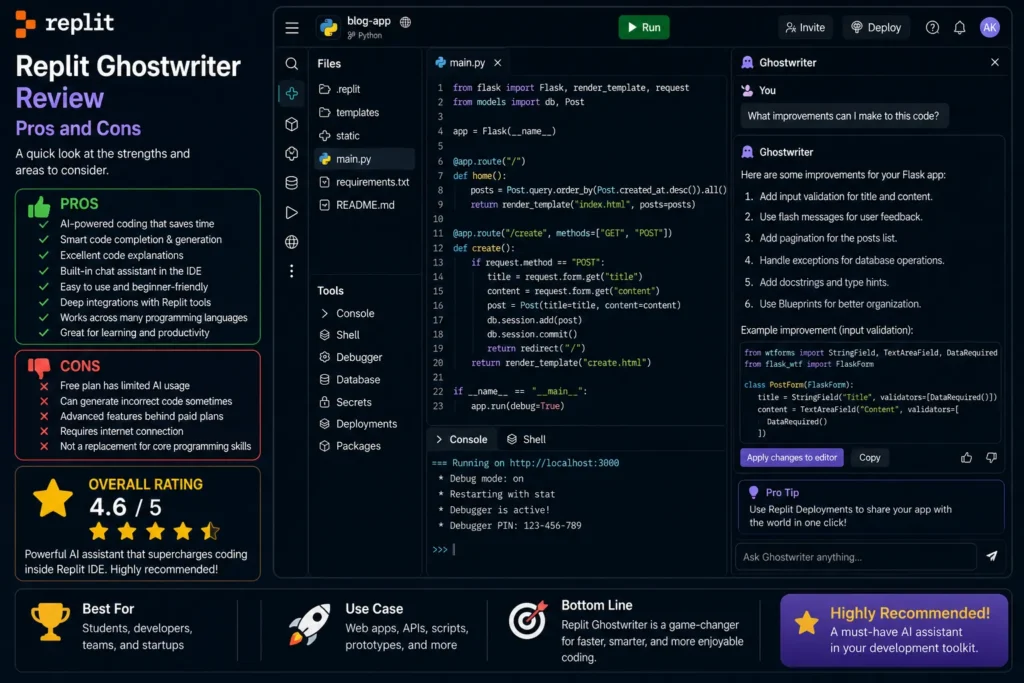
In real-world usage, Replit Ghostwriter performs best in small to medium-sized projects.
Users consistently highlight how fast it is to go from idea to working product.
Testing shows that while the AI is powerful, it may require multiple iterations for more advanced applications.
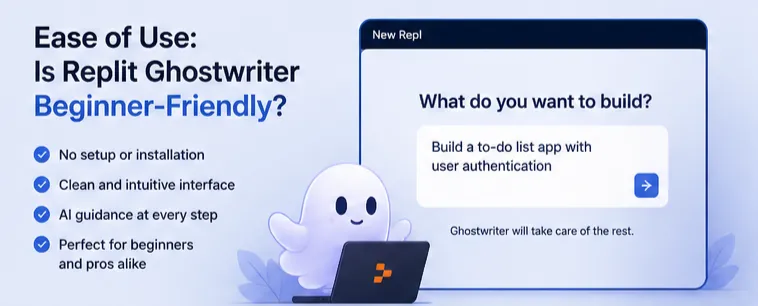
Yes — and that’s one of its biggest advantages.
Replit removes traditional barriers like:
Everything runs in the browser.
This makes it ideal for:
Even if you’ve never coded before, you can start building within minutes.
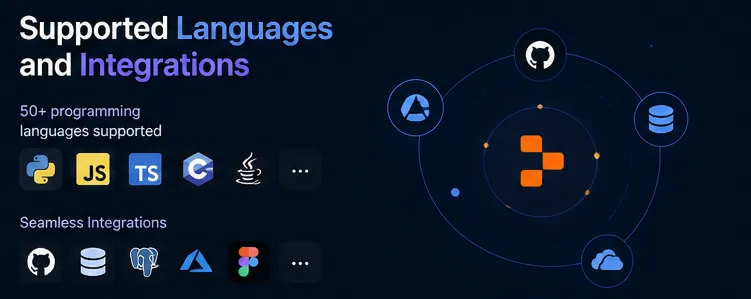
Replit supports a wide range of programming languages, including:
It also integrates with:
Additionally, it supports importing projects from tools like GitHub and even design tools like Figma.
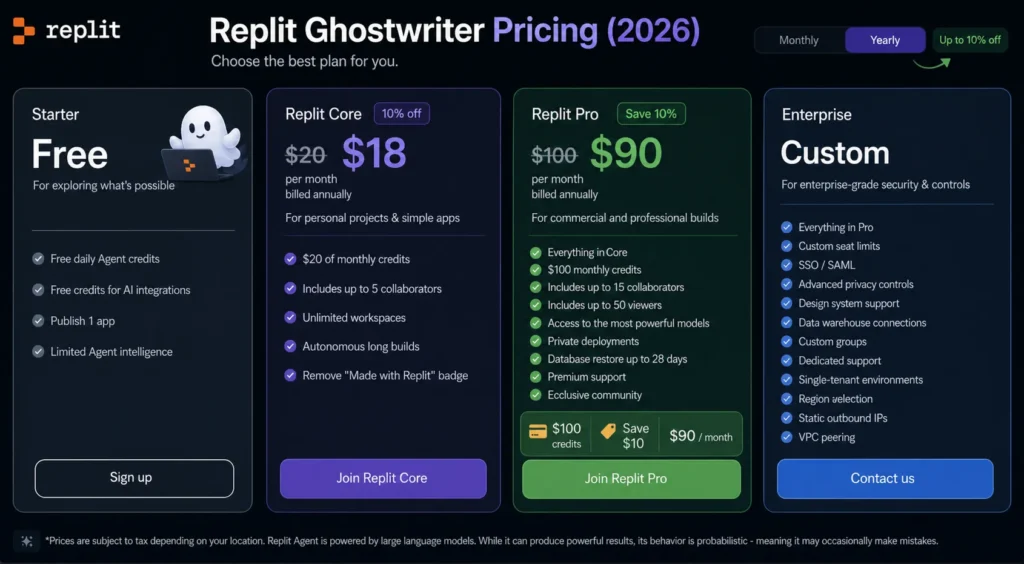
Replit uses a subscription model with AI credits.
Pricing can become a concern because:
This is one of the most common complaints among users.
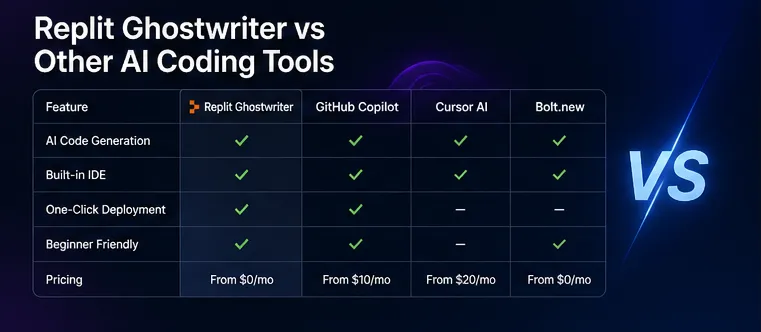
When compared to other tools:
Replit stands out because it combines AI + IDE + hosting in one platform.
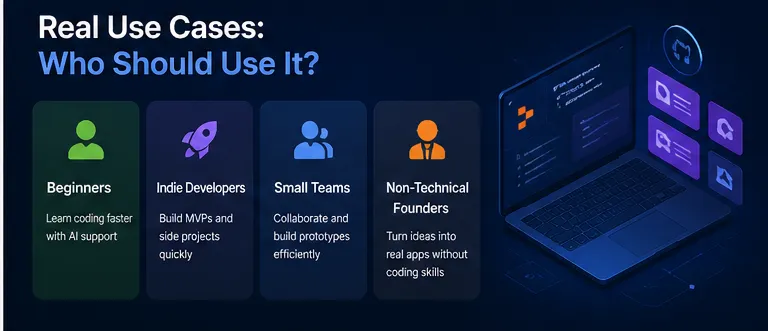
Replit Ghostwriter is best for:
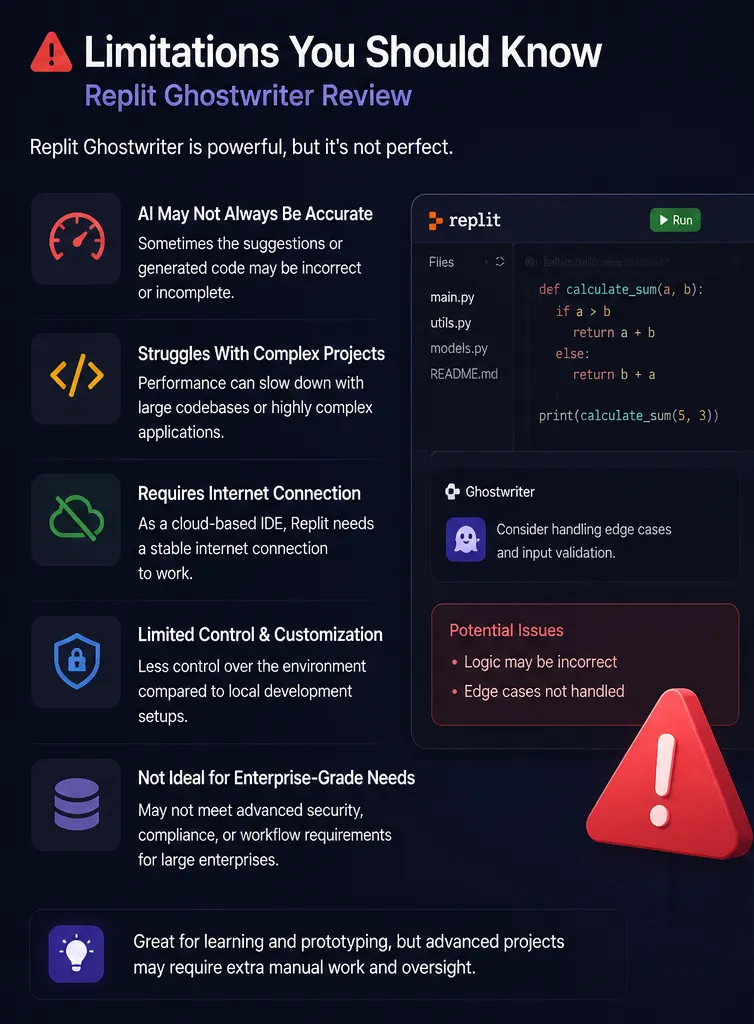
Replit is powerful, but not perfect.
Also, since it’s cloud-based, data and code are hosted externally — which may not suit enterprise needs.
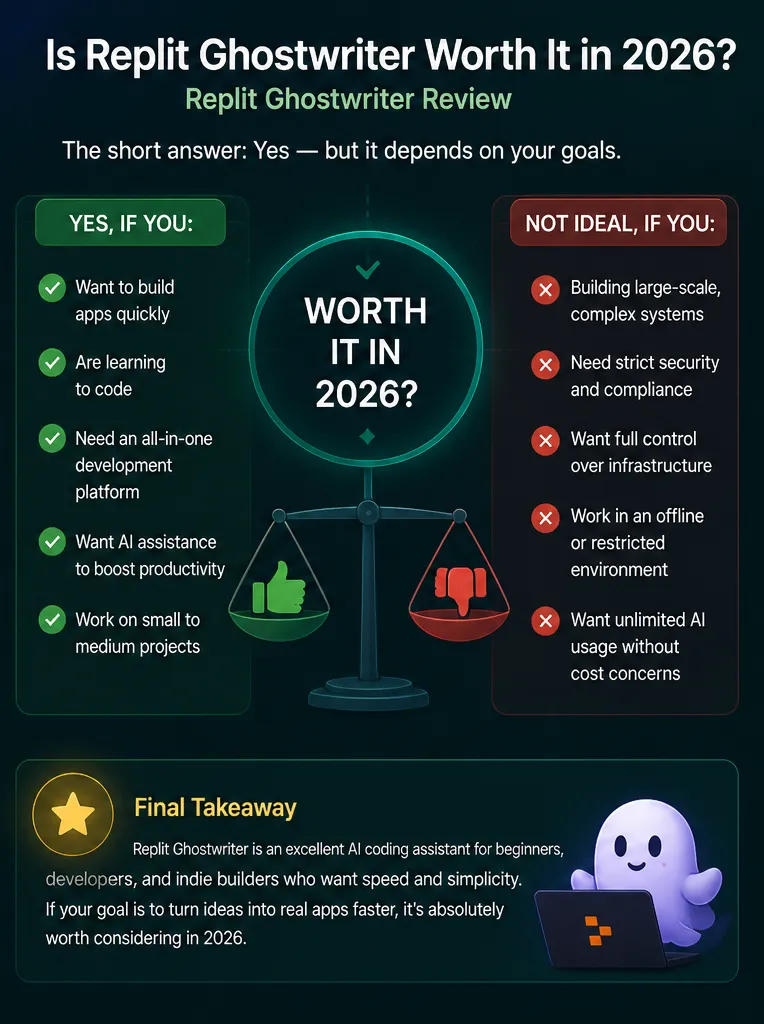
The short answer: Yes — but it depends on your goals.
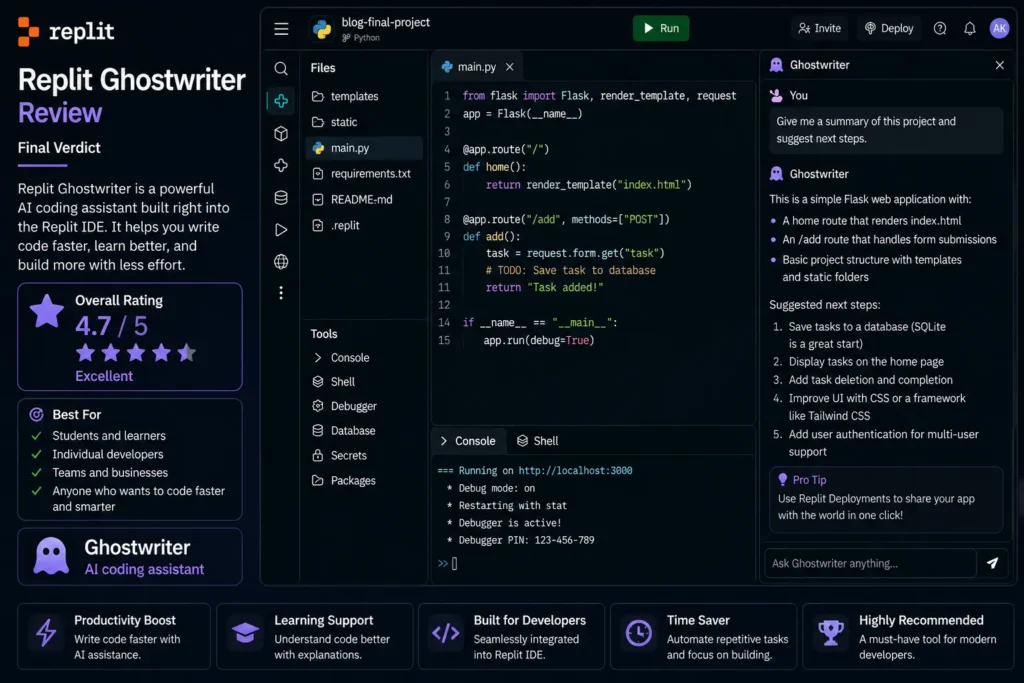
Replit Ghostwriter is one of the most accessible AI coding tools available today. It lowers the barrier to entry for building software and enables users to go from idea to working product faster than ever.
Its biggest strength is simplicity — everything is integrated into one platform. You don’t need to install anything, configure environments, or manage infrastructure.
However, that convenience comes with trade-offs:
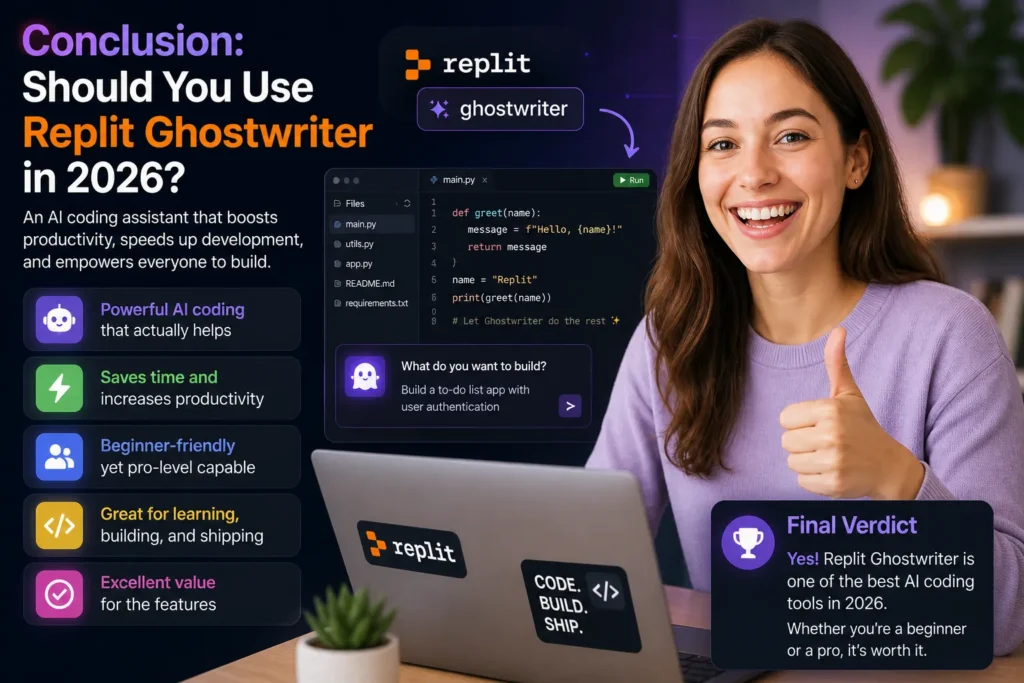
Replit Ghostwriter is a powerful tool that combines AI coding, development, and deployment into a single platform. For beginners, it’s one of the easiest ways to start building apps. For developers, it’s a fast way to prototype ideas.
If your goal is speed, simplicity, and experimentation — it’s absolutely worth using.
If your goal is building large, production-grade systems with full control — you may need something more advanced.
Either way, Replit represents the future of development: AI-assisted, fast, and accessible to everyone.